I learned how to recognize manipulation the hard way. Not in a boardroom. In my own kitchen, at 9pm. My phone buzzed. A friend I had known for six years wanted to borrow my weekend again. Third time that month.
I said yes. I always said yes.
Then I sat there with cold tea and wondered, why do I always see people clearly after it is too late?
Quick Answer: How do I recognize manipulation?
You stop listening to the words and start watching the patterns. What repeats? What happens when you say no? Does their behavior match their speech? Your body usually knows before your mind admits it.

Why Do We Only See It After the Fact?
Manipulation rarely announces itself. It arrives dressed as need, as friendship, as you are the only one who understands me.
We miss it because we are taught to look for obvious bad guys. But the people who take the most from us are usually gentle about it. They make us feel needed. They make saying no feel like cruelty.
I spent years explaining away the same warning signs. She is just stressed. He did not mean it that way. I am overthinking again. That last sentence is the most dangerous one a kind person can say.
The Test That Changes Everything
A friend once told me about a classmate who kept borrowing things, then lunch money. The classmate said, you are my best friend. So the borrowing continued.
I recognized that sentence. I had said a version of it myself, many times, about adults.
So instead of saying just stop, I asked one question. What does he do when you say no?
The answer came quietly. He gets really sad. And then I feel bad.
There it is. That is the pattern. Not the asking. The reaction to your boundary.
Four Things to Watch
What repeats. One bad day is a bad day. A pattern is a message. If the same person disappoints you the same way three times, the third time is not an accident.
What happens when you say no. Healthy people adjust. Unhealthy dynamics push back, sulk, guilt-trip, or suddenly become very fragile.
The gap between words and actions. Trust behavior, not speech. Speech is cheap. Behavior costs something.
How you feel after time with them. Drained? Confused? Apologizing for things you did not do? Your body keeps score even when your mind makes excuses.
The Three-Time Rule
First time. You do not react. You note it. You stay open.
Second time. You pay attention. Same behavior? Same excuse? You watch more carefully, quietly.
Third time. You stop explaining it away.
That is it. It sounds almost too simple. But for someone who forgives fast and doubts herself, having a rule protects me from my own kindness.
I used it with a coworker who kept forgetting to credit my work. Third time, I stopped waiting for her to change and started documenting everything. I used it with a relative who only called when she needed something. Third time, I stopped expecting more. I did not cut her off. I just stopped being surprised.
What About Me? Do I Do This Too?
This question humbled me. Sometimes I have used sadness to get my way. Sometimes I said it is fine when it was not, and let the other person feel the weight of my silence. That is a form of pressure too.
Understanding human nature is not only about spotting others. It is about being honest about the small ways I have done it myself. That honesty keeps me from becoming suspicious of everyone, which is its own kind of loneliness.
Seeing Clearly Does Not Mean Closing Your Heart
Learning to recognize manipulation is not about losing trust in everyone. It is about managing expectations and building relationships on awareness instead of assumptions.
My closest friend is the opposite of every pattern above. When I say no to her, she says, okay, tell me when you are free. No sulking. No punishment. Just ease.
That contrast taught me more than any bad experience did. When you know what healthy feels like, the unhealthy stands out fast.
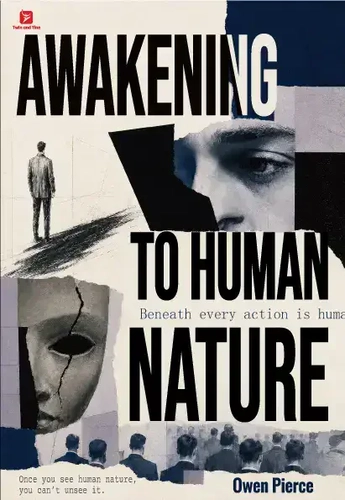
If you want to go deeper, Awakening to Human Nature by Owen Pierce looks at the patterns behind behavior, self-interest, loyalty, insecurity, status, and fear. It helped me stop focusing on single signals and start watching what repeats.
FAQ
What is the clearest sign of manipulation?
How someone reacts to your no. Healthy people adjust. Manipulative dynamics push back, sulk, or guilt-trip.
Can manipulation be unintentional?
Yes. But intention matters less than impact. If it is hurting you, it is worth addressing.
How do I stop being manipulated without becoming cold?
Watch patterns, not people. You can stay warm and still protect your time.
What if the person is family?
You may not be able to cut them off. But you can stop being surprised. That alone changes how much it hurts.
Should I confront someone who manipulates me?
Not always. Sometimes the safest move is to quietly change how you respond. You do not owe anyone a confrontation.
A Closing Thought
Learning to recognize manipulation is not about becoming suspicious of everyone. It is about trusting your own observations more than someone else’s explanations.
Your body already knows. You just have to stop talking yourself out of it.
References
- Pierce, Owen. Awakening to Human Nature.
- Lerner, Harriet. The Dance of Anger. Harper & Row, 1985.
- American Psychological Association. “Manipulation.” APA Dictionary of Psychology.