I still remember the afternoon someone told me their day was fine. They said it while pulling at their sleeve cuff. Again and again. Their voice stayed flat. Their eyes went to the floor, then the window, then the floor.
I did not need a degree to know something was wrong. I needed to stop listening to the word fine and start watching everything around it. That is what body language how to read others thoughts really comes down to. Not mind reading. Pattern reading.
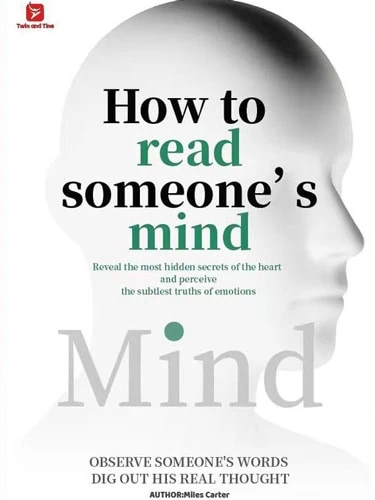
Miles Carter’s book How to Read Someone’s Mind puts it this way. People reveal themselves through the signals they send every day. Tone. Posture. Habits. The small things they do when they think no one is watching.
Quick Answer: How do I read body language?
You stop listening to the words and start watching what surrounds them. Look for changes from someone’s baseline, repeated behaviors, and the gap between what they say and what their body does.
Why Do We Keep Missing the Signals?
Here is what I have learned about myself. When someone talks, I am usually half-listening. Part of my brain is on the dishes, the email, tomorrow’s schedule. The words go in. The signals do not.
A forced smile is different from a real one. A real smile pulls at the corners of the eyes. A polite one stays near the mouth. That is not a trick. It is anatomy.
Why does this matter? Because people often do not have the words yet. They show us with their bodies what they cannot say out loud.
What Is the Body Saying When Someone Says Nothing?
I know someone who is truly fine when they are loud. They bounce. They interrupt. When something is bothering them, they go quiet and neat. They line up their shoes. They fold their napkin into a tiny square.
The first time I noticed this pattern, I almost laughed. It was so obvious once I saw it. A tidy person is a worried person.
Carter’s book calls this repeated behavior. One tidy napkin means nothing. Tidy napkins every time they come home from a certain place means something. The pattern is the message. Not the single moment.
Anger, Jealousy, and Worry Show Up in the Body First
Anger comes fast. A red face. Tight fists. A voice that gets louder and higher. That one is easy.
Jealousy is quieter. Someone gets very helpful when they feel left out. Suddenly they are offering to set the table, to help with homework. That helpfulness is not generosity. It is a request. Notice me too.
Worry looks like fidgeting. A bouncing knee. Chewed fingernails. A pencil tapped against the desk.
Insecurity is the hardest one. It hides behind bragging. I got the highest score. Everyone wanted to sit with me. When someone talks like this, I have learned to ask one gentle question instead of correcting them. Usually the truth comes out in a minute or two.
How Do You Respond Without Calling It Out?
The worst thing I ever did was say, I can tell you are lying. The other person shut down for a week.
What works better is naming the feeling, not the behavior. You seem a little heavy today. That sounds like it was hard. Then I wait. I do not fill the silence. Silence is where people find their words.
Carter’s book suggests paying attention to how people act when they have nothing to gain. At a party, watch who shares the last slice of cake when no one is looking. Watch who helps clean up without being asked. That is the real person showing through.
One Thing You Can Try Tonight
At dinner, put your fork down. That is it. Put your fork down and watch someone’s hands for one full minute while they talk.
You will be surprised what you notice. The way they hold their cup. Whether their shoulders are up near their ears. Whether they look at you or past you.
It feels awkward at first. It also works. I once saw someone’s shoulders drop the moment they finally said what was bothering them. Their body relaxed before their voice did.

When to Stop Reading and Just Be There
Here is the honest part. Not every signal needs to be decoded. Sometimes someone is quiet because they are tired. Sometimes they are grumpy because they are hungry. If I treat every sigh like a clue, I become a detective in my own home. Nobody wants to live with a detective.
The goal is not to catch people. The goal is to understand them a little better so we can love them a little better.
Carter’s book ends with a line that stayed with me. For anyone who has ever thought, something felt off, I just wish I had noticed it sooner. I have thought that sentence many times. About friends. About a boss. About my own mother, near the end, when her hands had gone still and I kept talking over what they were trying to tell me.
So tonight, when someone says their day was fine, I will put my fork down. I will look at their hands. And I will wait, without saying a word, until the real answer finds its way out.
FAQ
Can you really read someone’s thoughts through body language?
Not thoughts exactly. But you can read comfort, discomfort, stress, and changes from their baseline. That is often more useful than knowing what they are thinking.
What is the most reliable body language signal?
Changes from someone’s baseline. A sudden stillness. A shift in breathing. A hand that moves to the face. The shift tells you more than the gesture.
How do I read body language without staring?
Blend your gaze. Look at the whole face, not just the mouth or eyes. Watch the hands. You can notice a lot in your peripheral vision.
What if I read it wrong?
You will sometimes. Just say so. I thought you seemed upset earlier. Was I wrong? That question opens a door instead of closing one.
When should I stop reading and just ask?
When you have noticed a pattern and you care about the person. Body language gives you clues. Words give you confirmation. Use both.
A Closing Thought
The goal is not to catch people. The goal is to understand them a little better so we can love them a little better.
Put your fork down. Look at their hands. Wait.
References
- Carter, Miles. How to Read Someone’s Mind.
- Goleman, Daniel. Emotional Intelligence. Bantam Books.
- American Psychological Association. “Nonverbal Communication.” APA Dictionary of Psychology.