Neutral Me: I lost it again today. A colleague interrupted me three times in the meeting, and I snapped back. Now the office feels tense. I messed up.
The Eruptor: Hold on. Don’t rush to blame yourself. He did interrupt you three times. You said nothing the first time. You held back the second. You only pushed back the third. That’s not “exploding out of nowhere.” That’s “holding it in until you broke.” Those are two different things.
Neutral Me: So what? The result is the same — I’m the “emotional” one. Am I supposed to feel no anger at all?
The Eruptor: Managing anger and suppressing anger are not the same thing. Try shoving anger into a bottle, shaking it hard, screwing the lid tight — it just explodes harder. That was you today.
The Observer (an emotionally healthy friend): You both make some fair points. But you’re also both missing the mark.
Neutral Me, your issue isn’t getting angry — it’s waiting until the last minute to deal with it. Eruptor, your issue is using “he was wrong” to justify blowing up — being right doesn’t always mean being productive.
Here’s how emotionally healthy people handle anger. Three principles.

First, let anger exist — but don’t let it drive.
Anger is a warning light, not a steering wheel. When the light comes on, you check the engine. You don’t smash the car.
Next time someone interrupts you, don’t say “it’s fine” (you’re lying to yourself). Don’t slam the table (you’re crashing the car). Try this instead: “You just interrupted me before I finished. Please let me finish my point.”
That sentence doesn’t sound fierce. But it does one thing: it turns your anger into a request. You’re not attacking the other person. You’re protecting your own boundary.
Second, build a cooling channel.
The physiological peak of anger lasts about 20 to 30 minutes. During that window, your prefrontal cortex — the part responsible for rational thinking — is basically hijacked by your amygdala. Trying to reason your way through it? Not effective.
Emotionally healthy people do one thing: leave the scene. Get a glass of water. Use the bathroom. Walk a lap around the hallway. You’re not running away. You’re waiting for your brain to come back online.
You can also give yourself a “cooling cue” in advance — for example, silently say “blue elephant” to yourself. Sounds silly. But that odd image interrupts anger’s autopilot and buys you about five seconds of calm.
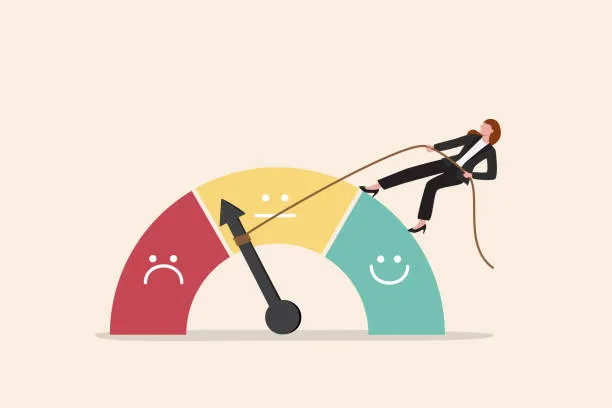
Third, do a post-anger review — not rumination.
Rumination sounds like: “He interrupted me again. Who does he think he is. He did it last time too. I’m so done with this…” — you’re pouring fuel on the fire.
A review asks three questions:
- What boundary was crossed that made me angry?
- Did I express any dissatisfaction before things boiled over?
- Next time a similar situation comes up, what could I do differently — earlier?
Rumination looks backward into blame. A review looks forward into adjustment. Emotionally healthy people still get angry. They just don’t keep getting angry about the same thing in the same way.

Neutral Me: So I’m not supposed to become someone who never gets angry?
The Observer: Exactly. You’re supposed to become someone who gets angry but doesn’t get run by anger. Anger is a signal, not a malfunction. You hear the signal. Then you choose how to respond. That’s emotional health.
The Eruptor: Alright. Next time I’ll try not to wait until the third interruption to speak up.
The Observer: Now you’re getting it.