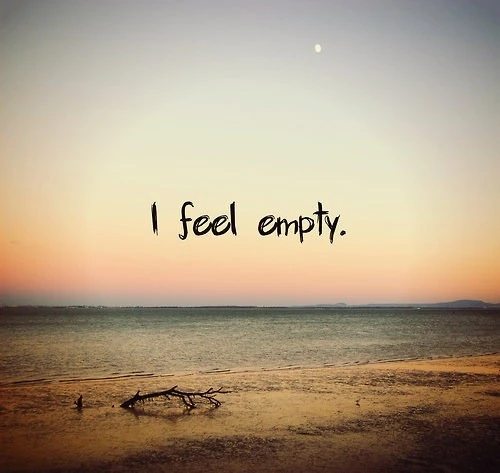
I used to think something was wrong with me. I’d wake up, go to work, come home, scroll through my phone, go to sleep. Repeat. On the surface, my life was fine. Good job, decent apartment, friends who checked in. But inside? Nothing. Just this hollow feeling, like someone had scooped out my insides and left a cold, quiet space.
For years I told myself I was just tired. Or stressed. Or maybe this was what being an adult felt like. It wasn’t. It took three therapists and one very honest conversation with myself before I realized I wasn’t broken. I was just disconnected.
Here’s what I wish someone had told me back then.
The real problem isn’t that you feel nothing. It’s that you’ve stopped feeling like yourself.
The emptiness isn’t random. It’s a signal. Your brain is trying to tell you something that matters.
We live in a world that rewards productivity over presence. You get praised for working harder, not for just being still. You get promoted for output, not for noticing how your body feels when you wake up. Over time, you learn to ignore your internal signals because they don’t pay the bills.
So you keep pushing yourself. You perform. You become a version of yourself that works well in meetings and dinner parties. And then one day, you realize you don’t know which parts are real anymore.
The emptiness isn’t a lack of feeling. It’s a lack of connection to your own experience. You’ve become a stranger to yourself. And strangers don’t feel much for each other, do they?
Practice Points: Three Techniques That Actually Work
1. Stop Looking for the Big Feeling. Start With the Small One.
Here’s where I messed up for years. I kept waiting for this dramatic emotional breakthrough. I wanted to cry or scream or feel this huge wave of something that would prove I was alive. That never happened. Because numbness doesn’t work that way.
What I learned instead was to notice the tiny things. Not the big emotions. The micro-moments.
Try this right now. Put your phone down. Take one breath. Not a deep meditative breath — just a normal one. Now ask yourself: What did that feel like? Cold air? Warm? Did your shoulders drop a little? Did you notice your feet on the floor?
Most of us will say no. We didn’t notice. That’s the point.
The practice is this: three times a day, pause for ten seconds. Not to think. Just to sense. Notice things like the weight of your coffee cup, the texture of your shirt collar, or the sound of the fridge humming. You’re not looking for meaning. You’re looking for sensation. Pure, boring, physical sensation.

Why this works: Your emotional numbness is a habit of ignoring your body. You’ve trained yourself to skip over the raw data of experience and go straight to interpretation. Bring it back to the data. The interpretation can wait. Later, you might notice that the empty feeling softens a little. Not because you solved anything. Because you started showing up.
Don’t try to feel happy. Don’t try to feel sad. Just feel the temperature of the room. That’s enough for now.
2. Stop Telling Yourself a Story. Start Asking a Question.
When you feel empty, your brain will offer you explanations. “I’m depressed.” “I’m broken.” “I’m just not cut out for this.” These are stories. And stories make the numbness worse, because they turn a feeling into an identity.
I used to wake up and think, “I feel empty. That means I’m empty as a person.” Notice the leap? That’s not logic. That’s narrative. And narratives are hard to escape because they feel true.
Here’s the technique. When you notice the emptiness, don’t let your brain finish the sentence. Interrupt it with a question.
Say it out loud. “What exactly do I feel right now? Not what I think it means. What does it physically feel like?” Maybe it’s a tightness in your chest. Maybe it’s a heaviness behind your eyes. Maybe it’s nothing at all, just this blankness.
Then ask another question. “Is this feeling familiar? Have I felt this before? What was happening then?”
The shift is from explanation to exploration. You’re not trying to figure out the answer. You’re trying to stay curious. Curiosity and numbness cannot coexist for long. One of them always wins.
A friend of mine calls this “poking the emptiness with a stick.” You don’t have to fix it. You just have to examine it. The moment you examine it, you’ve already started to separate from it. You’re not the emptiness. You’re the one looking at it.
Don’t analyze. Don’t diagnose. Just ask. And then listen without expecting an answer.
3. Do Something That Feels Ridiculously Small. Then Do It Again Tomorrow.
This is the one that saved me. And I hate how simple it sounds.
When you’re numb, big actions feel impossible. Going to the gym? Forget it. Starting a new hobby? Too much. Even calling a friend feels exhausting. So you do nothing. And the emptiness grows.
The trick is to shrink the action until it feels almost stupid.
Not “I will exercise for 30 minutes.” That’s a recipe for failure. Try “I will put on my shoes.” That’s it. Just the shoes. If you want to take them off after, fine. But put them on first.
Not “I will cook a healthy meal.” Try “I will wash one vegetable.” One. Then you can walk away.
Not “I will journal for 20 minutes.” Try “I will write three words.” Any three words. “Blue. Coffee. Tired.” Done.
Why this works: Your brain sees a big goal and says “too risky, too much energy, stay safe.” But a tiny action doesn’t trigger that alarm. It’s too small to be scary. And once you start, momentum often carries you forward anyway. Some days it won’t. Some days you’ll just put on the shoes and sit there. That counts. That’s still a win.
The emptiness wants you to stay still. Movement breaks its spell. Even one inch of movement.
Don’t set goals. Set micro-actions. And don’t judge yourself for how small they are. The only rule is consistency. Do one ridiculous thing tomorrow. Then the next day. The emptiness will start to feel less permanent. Not because you fixed anything. Because you proved you can still act.
The Ending: You’re Not Empty. You’re Just Asleep.
I know how convincing the emptiness can be. It tells you that you’re defective, that this is just who you are now, that everyone else has figured it out and you missed the memo. None of that is true.
The feeling of emptiness is a symptom of disconnection, not a diagnosis of your worth. You have not lost the ability to feel. You have simply stopped practicing. And that is reversible.
Think of it like a muscle you haven’t used in years. It’s not gone. It’s just weak. It hurts to flex it at first. It feels strange and unproductive. But the capacity is still there, waiting for you to remember how.
Here is what I want you to do today. Not tomorrow. Today.
Take three minutes. Set a timer. Sit somewhere quiet. Put one hand on your chest and one on your stomach. Breathe normally. Don’t try to feel anything. Just notice the rise and fall of your hands. That’s it. Three minutes.
You might feel nothing. You might feel annoyed. You might start crying. None of it is wrong. The only wrong move is to not try.
You are not empty. You’ve just forgotten how to exhale. And you can always breathe again.