You‘re in the middle of a conversation, and someone says something that lands wrong. Before you can think, your chest tightens, your face heats up, and the words are right there on your tongue — sharp, defensive, ready. Maybe you stop yourself in time. Maybe you don‘t.
Then there’s traffic — the kind where you’re already running late and the brake lights stretch for miles. Your jaw clenches. Your hands grip the wheel. Or it‘s late at night, and you‘re lying in bed while your brain replays the same five seconds of an awkward thing you said eight hours ago.
These moments aren‘t the problem. The problem is what you do next.
What Is Emotion Regulation?
Emotion regulation isn‘t about keeping a lid on how you feel. It refers to how people influence what emotions they feel, when they feel them, and how those emotions are expressed or experienced. That might sound technical, but here‘s what it actually means: you have more say in your emotional life than it feels like in the moment.
Some researchers describe emotion regulation as a set of learned skills rather than something you’re simply born with — or without the natural talent for. Temperament might influence how quickly you react to things, but the ability to manage those reactions develops over time. It‘s not about turning off anger or swallowing sadness. It‘s about recognizing what you‘re feeling and responding in ways that work for you rather than against you.
Why Emotion Regulation Matters in Daily Life
The way you handle emotions shapes nearly everything. Relationships tend to suffer when one person‘s reactions feel unpredictable or overwhelming. At work, attention and focus often break down when difficult feelings go unmanaged. And over time, the physical toll of unregulated stress — the kind that lives in your shoulders and your sleep and your patience — becomes harder to ignore.
There‘s also the question of decision-making. Strong emotions have a way of narrowing what you can see. Options that might seem reasonable on a calm afternoon can disappear entirely when you‘re angry or afraid. Learning to regulate doesn‘t mean you stop feeling those things. It means you keep more of your options open.
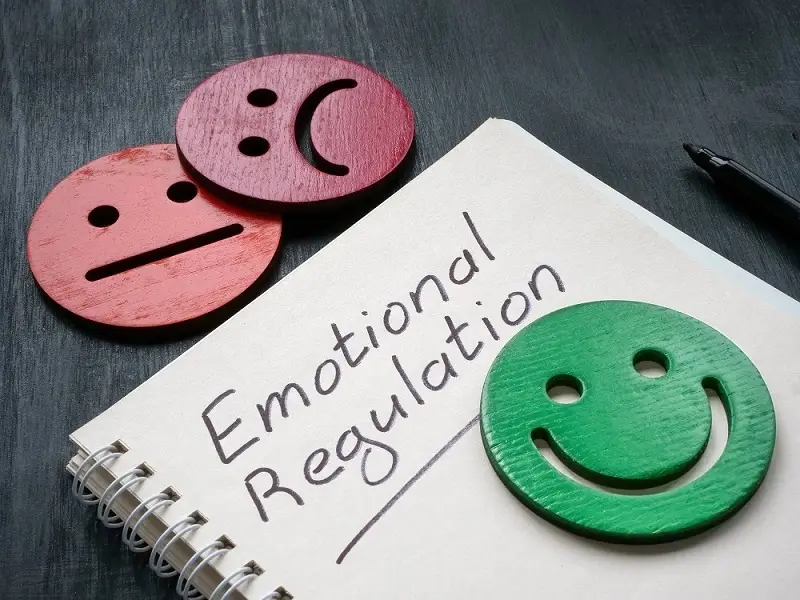
Signs You May Struggle With Emotion Regulation
Most people have moments when emotions get the better of them. But there‘s a difference between a bad day and a consistent pattern. You might notice that small problems seem to trigger reactions that feel bigger than the situation warrants. Or you might notice that once you get upset, it takes a long time to calm down. Some people find themselves ruminating — going over the same interaction again and again without resolution. Others simply avoid anything that might stir up difficult feelings in the first place.
None of these patterns mean something is wrong with you. They usually mean you‘ve developed habits around emotion that made sense at some point but aren‘t serving you anymore.
Common Everyday Situations That Trigger Strong Emotions
Work is an obvious one. Deadlines, feedback, misunderstandings with colleagues — these things happen constantly. Relationships bring their own triggers, especially when you feel unheard or disrespected. Parenting might be the ultimate test, because children have an extraordinary ability to trigger every frustration you have while you‘re already exhausted.
Social media doesn‘t help. It‘s designed to provoke reactions, and it works. Financial stress sits underneath everything else, making other triggers feel heavier than they would otherwise.
7 Emotion Regulation Skills You Can Use Every Day
1.Pause before reacting.
This sounds simple, but it‘s harder than it looks. The goal isn‘t to suppress what you feel. It‘s to create a small gap between the emotion and your response. Even three seconds can change what happens next. Some people count backward. Some take a single slow breath. Some silently say “wait.” The specific technique matters less than the habit of creating space.
2.Name the emotion.
There‘s research behind this — putting feelings into words seems to have a calming effect. But you don‘t need the science to try it for yourself. When you feel something strong, see if you can find a precise word for it. Not just “bad” or “fine,” but something more specific. Frustrated. Disappointed. Anxious. Ashamed. The act of naming creates a little distance between you and the feeling.
3.Challenge automatic thoughts.
Your brain makes quick interpretations, and it doesn‘t always get them right. A colleague walks past without saying hello, and you might think, “They‘re angry at me.” Your child talks back, and you might think, “They have no respect for me.” These interpretations feel like facts in the moment, but they‘re usually just one possible reading of the situation. See if you can come up with another explanation. Not a better one, necessarily — just a different one.
4.Breathe.
This isn’t the kind of advice that feels helpful when you’re already upset — but it works for a specific reason. Deep, slow breathing activates physical systems that counteract the stress response. You don‘t need to meditate for twenty minutes. Four or five slow breaths can shift something.
5.Practice mindfulness in small doses.
Mindfulness often gets packaged as something you need to do for hours, but that‘s not the point. The real skill is noticing what‘s happening without immediately trying to change it. You can practice this while washing dishes or walking to your car. Notice the feeling in your body. Notice the thought moving through your mind. You don‘t have to agree with it or fight it.
6.Move your body.
Physical movement changes your internal state. It doesn‘t have to be exercise in the formal sense. A short walk, some stretching, even standing up and shaking out your hands can interrupt a downward spiral. The effect isn‘t psychological — it‘s physiological. You‘re giving your nervous system something else to do.
7.Reach out for support.
People often wait until they‘re completely overwhelmed to ask for help. But regulation works better when you reach out earlier. A text to a friend. A quick conversation with someone who gets it. You don‘t need them to solve anything. You just need to not be alone with the feeling.
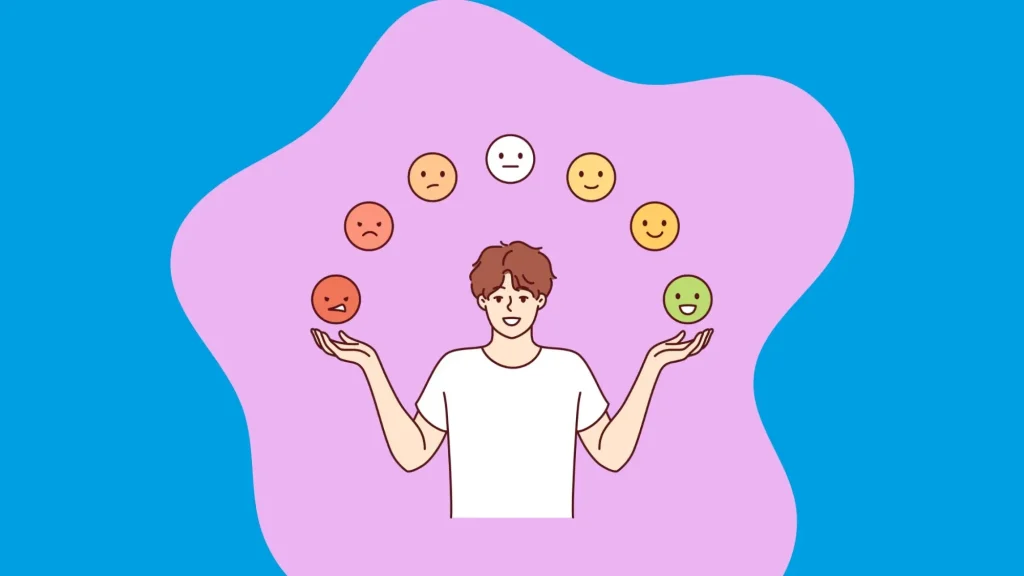
When Emotion Regulation Feels Impossible
Sometimes the usual strategies don‘t work. You might find that no amount of deep breathing touches what you‘re feeling. Or you might find that your reactions feel completely out of proportion to anything happening in your life. Chronic stress, burnout, anxiety, and depression can all interfere with your ability to regulate .
In those situations, struggling with emotions isn‘t a personal failing. It‘s a signal that something else needs attention. Professional help exists for exactly this reason. Therapy isn‘t for people who are broken — it‘s for people who want better tools than the ones they have.
Can Emotion Regulation Be Learned?
Yes. The brain remains capable of change throughout life. Every time you practice a different response to an emotion, you strengthen a new pathway. The old habits don‘t disappear, but they stop being the only route available.
This doesn‘t happen overnight. You‘ll have days when you forget to pause, when you snap at someone, when you lie awake replaying things you wish you hadn‘t said. That‘s not failure. That‘s practice.
Sources:
Gross, J. J. (1998). The emerging field of emotion regulation: An integrative review. Review of General Psychology.
Schreiber & Veilleux (2022). Emotion regulation definitions and applications. NIH.
Brackett, M. (2025). Dealing with Feeling. Yale Center for Emotional Intelligence.
Van der Kaap-Deeder et al. (2023). Emotion crafting and wellbeing. Journal of Happiness Studies.