I learned this the hard way. Last spring, my mother called about the holiday plans. Three minutes in, we were both raising our voices. About a train schedule. A train schedule.
Later that night I sat in the kitchen and thought, how do you talk to someone without arguing when every small thing turns into a fight? I didn’t have a clean answer then. I have a messy, working one now, and it comes from a year of trial and error with the people I love most.
I’m not a counselor. I’m just someone who got tired of losing evenings to pointless battles.
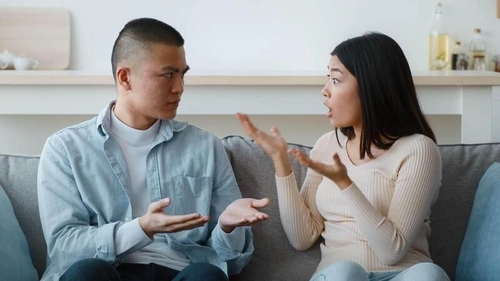
Why Do Small Talks Turn Into Arguments So Fast?
Here’s what I noticed. The argument almost never starts with the topic. It starts with a feeling.
My mother wasn’t upset about the train. She was upset that I’d made the plan without calling her first. And I wasn’t upset about her tone. I was upset that she questioned a decision I thought was obviously fine.
Two people, two different wounds, one train schedule.
Psychologist John Gottman, who studied thousands of couples over decades, found that most fights aren’t about the surface issue at all. The surface issue is just the door. What’s behind the door is usually some version of: do you respect me? Do you still want me around?
So when I ask myself how to talk to someone without arguing, the real question underneath is different. Can I find out what they’re actually protecting?
My friend Wei told me something that stuck. Her husband gets defensive every time she mentions money. For years she thought he was just stubborn. Then one day she asked, what does money mean to you? He said his father lost everything when he was twelve. He wasn’t defending a budget. He was defending a scared kid.
That conversation didn’t end in an argument. It ended in silence, then in him crying. That had never happened before.
How Do You Actually Do It?
The single most useful thing I changed. I stopped trying to win the first thirty seconds.
Arguments are won or lost in the opening exchange. Not the whole conversation. The first thirty seconds. If both people come in with a ready answer, it’s over.
So I started doing something that felt almost rude at first. I let them finish. Completely. Even when I disagreed. Even when I had the perfect response sitting on my tongue.
My sister noticed. She said, why are you just sitting there? I said, I’m trying something. She laughed. But she also kept talking, and the thing she said next was the actual problem. It had nothing to do with what I thought we were fighting about.
A few phrases that helped me:
“Wait, say that part again. I want to make sure I get it.”
“Okay. I hear you. Let me think for a second.”
“I’m not trying to argue. I’m trying to understand what’s bothering you.”
That last one sounds stiff on paper. It works in real life. Try it once.
There’s a scene from the movie Marriage Story that I think about often. Two people who love each other, both right in their own way, both unable to stop. It’s painful to watch because I recognize it. I’ve been both of them.
What If the Other Person Keeps Pushing?
Some people push because they’re used to fighting. Silence feels like losing to them. If you stay quiet, they push harder.
In that case, a small acknowledgment works better than defense. Not agreement. Acknowledgment.
“I can see this matters a lot to you.”
That one sentence defuses more than any clever argument I’ve ever made. It doesn’t mean you agree. It means you’re not dismissing them.
My uncle is like this. He argues for sport, I think. One day I tried it on him. He stopped mid-sentence. Then he said, well, yes, it does. And the whole thing fell apart. No fight. Just two people standing in a kitchen.
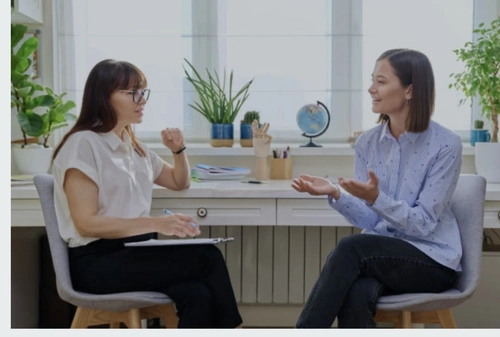
The Two-Question Pause
Here’s the tool I use now. I call it the Two-Question Pause.
Before I respond to anything that stings, I ask myself two questions.
One. What is this person afraid of losing right now?
Two. What do I actually want from the next five minutes?
The second question is the harder one. Most of the time, what I want is to be right. That’s not a goal. That’s a trap. When I can name what I actually want, usually it’s peace, or closeness, or to be done with the conversation, the next sentence comes out differently.
The pause takes about four seconds. Four seconds. Longer than you think. Long enough.
I’ve used this with my partner, with my mother, and once with a customer service rep who was clearly having a worse day than me. It’s not magic. Sometimes I still snap. But the snap comes later, and it’s smaller.
Does This Work With Everyone?
No. Some people aren’t ready. Some relationships aren’t safe enough for this. If someone uses your calmness as a weapon, that’s information. It’s not a failure on your part.
But with the people who actually want things to be better, this pause changes the temperature. It gives both of you a small exit.
My mother and I still argue about the train. But now we argue for two minutes instead of forty. And sometimes we laugh in the middle of it. That’s a win.
What I’d Rather Keep
The night after that holiday call, I couldn’t sleep. I kept replaying the same loop. What I should have said. What she should have said.
Now when I feel that loop starting, I remember something simple. Nobody wins a conversation. You either keep the person or you keep the point. Rarely both.
I’d rather keep the person.