I still remember the meeting that changed how I think about reading people. A colleague nodded through my entire proposal. Smiled at all the right moments. Said “this looks great” twice. Then she voted against it in the follow-up email. I sat there staring at my screen, genuinely confused. What did I miss?
That question led me to books to understand people and predict their behavior. Not because I wanted to become a manipulator. More because I was tired of feeling like everyone else had received a social rulebook I never got.
Why Do We Keep Misreading People?
People leak information constantly. Through posture. Through the half-second delay before they answer. Through where their eyes go when they think no one is watching.
Most of us were taught to listen to words. And words are the most controllable thing a person produces. Tone is harder to fake. Facial micro-expressions are nearly impossible to manage for more than a fraction of a second.
Think about the last time someone told you they were fine. Did their voice drop slightly? Did their shoulders stay tight? Your gut caught something your ears dismissed.

What Does Reading People Actually Mean?
Reading people is not mind-reading. It is pattern recognition. It is noticing clusters of behavior and comparing them against a baseline.
A single crossed arm means nothing. Maybe the room is cold. But crossed arms, a leaned-back torso, and a foot pointed toward the exit? That is a person who wants out.
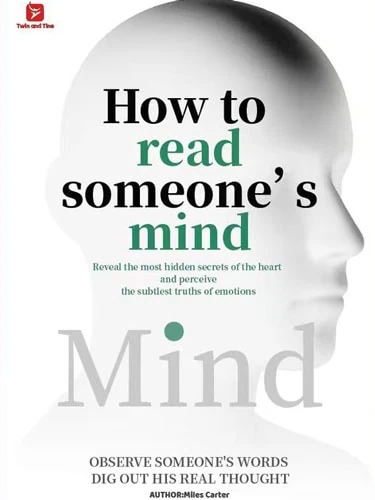
A book that helped me understand this is How to Read Someone’s Mind by Miles Carter. It does not just say watch body language. It breaks down specific signals, eyebrow flashes, eye contact patterns, posture, hand gestures, and explains what they tend to indicate in real situations. The section on vocal changes stuck with me. Pitch shifts, speech rate changes, and sudden pauses often reveal more than the actual sentence being spoken. Once I started paying attention to that, I noticed it everywhere.
Can Micro-Expressions Really Reveal Hidden Emotions?
Yes, but with a caveat. You cannot treat any single signal as proof of anything.
Micro-expressions are those brief facial movements that flash across someone’s face before they compose themselves. A flicker of disgust. A flash of fear. They last less than a second.
But context matters more than the signal itself. A micro-expression of anger during an interview could mean the interviewer disagrees with you. Or it could mean they just remembered a parking ticket. The value is in patterns. One flash means little. Repeated flashes in the same conversation? Now you are onto something.
How Do You Judge Personality Through Behavioral Patterns?
This is where the book goes deeper than most. It looks at behavioral logic in broader contexts. How someone behaves when drinking. How they treat service staff when they think it does not matter.
Why does this matter for predicting behavior? Because personality is consistent. A person who is rude to waiters will eventually be rude to you. A person who gossips about others will gossip about you.
Carter describes several personality patterns. The chronic gossiper. The over-cautious type. Dominant personalities. Emotionally immature individuals. Reading through those descriptions felt uncomfortable at times. I recognized people I know. I recognized myself in one or two.
A Framework You Can Use Today
Here is a simple approach I started using after finishing the book.
First, establish a baseline. How does this person normally talk, sit, gesture? Watch them for five minutes in a low-stakes moment.
Second, notice deviations. What changes when the topic shifts? Does their speech speed up? Do they touch their face more? Does eye contact break?
Third, look for the source. What question or topic triggered the shift?
This is not about catching liars. It is about understanding what matters to someone. The topics that cause deviation are the topics carrying emotional weight.
I tried this with a friend who kept saying she was happy about her new job. Her words were positive. But every time someone asked about her manager, her answers got shorter. Her smile tightened. Three months later, she quit.
Who Is This Book For?
If you are interested in psychology, communication, or human behavior, this book fits naturally on your shelf. It is also useful if you are in sales, management, or any role where understanding people gives you an edge.
But the most practical application might be personal. Romantic relationships. Friendships. Family dynamics. Knowing when someone is genuinely okay and when they are performing okay changes how you show up for them.
Where Are the Limits of Reading People?
No book makes you infallible. You will still misread people. You will still get surprised.
The goal is not certainty. The goal is better questions. When you notice a signal that does not match the words, you can ask, “Hey, you seem a little off today. Everything okay?” That question alone has improved more of my relationships than any technique.
The book gave me vocabulary for things I had sensed but could not name. That vocabulary turned vague unease into specific observation. And specific observation can be acted on.
One Last Thing
The meeting I mentioned at the start? I understand it now. My colleague’s smile was real. Her nod was genuine. She liked my idea in principle but had concerns she did not voice. Her body tried to tell me. Her tightened jaw when I mentioned budget. The way she glanced at her notes when I talked about timeline.
I was too busy hearing her words to notice.
That is what books to understand people and predict their behavior really offer. Not a superpower. A second chance to pay attention. The signals were always there. I just did not know how to look.
References
- Carter, M. How to Read Someone’s Mind: Practical Tools for Reading Body Language, Tone, and Hidden Intentions in Real Time.
- Ekman, P. Emotions Revealed: Recognizing Faces and Feelings to Improve Communication and Emotional Life. Holt Paperbacks.
- Goleman, D. Social Intelligence: The New Science of Human Relationships. Bantam Books.