I once watched a colleague agree to everything in a meeting. Nodded along. Said “absolutely” and “great point” about six times. Then, after everyone left, she turned to me and said, “I am not doing any of that.” I asked why she did not just say so in the room. She shrugged. “It is easier to agree and disappear than to argue and be marked as difficult.”
That moment stuck with me. It was not a lie, exactly. It was a performance. And it made me realize how much of what we call communication is really about managing how other people see us.
I started paying attention after that. Not in a suspicious way. In a curious way. Why do people say yes when they mean no? Why does flattery work even when we know it is flattery? Why do we trust some people instantly and distrust others for no clear reason?
The answers are not mystical. They are practical. And once you see them, you cannot unsee them.
Quick answer: How do I protect myself from being influenced without becoming cynical?
You pause before reacting, ask what the other person gains from your response, and watch patterns over time instead of judging single moments.
Here are three books that helped me understand the psychology behind influence and persuasion. One shows you how hidden motives work in everyday life. One explains why happiness and perspective matter more than cleverness. One takes you into the unconscious mind where our real desires hide.
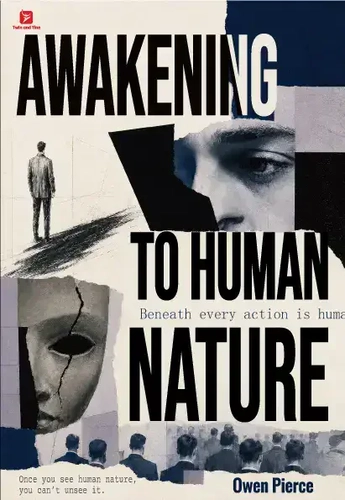
Awakening to Human Nature
A practical guide to recognizing hidden motives and protecting yourself from manipulation.
Owen Pierce wrote the book I wish I had found years earlier. It does not waste time being polite. It strips away the comfortable lies we tell ourselves about how people work.
The book covers seven areas. Cognitive laws, emotional patterns, desire and interest rules, social dynamics, workplace realities, manipulation tactics, and survival wisdom. Each section builds on the last one until you start seeing patterns everywhere.
Here is what I learned. People crave validation over truth. Loyalty expires when needs change. Kindness gets exploited. The smartest voices in the room are often the first ones attacked.
Pierce does not tell you to become cold or suspicious. He tells you to stop confusing kindness with safety. Those are not the same thing. And once you understand that, you cannot unsee it.
The sections on emotional pressure and social dynamics changed how I interact with people. I stopped expecting fair play. I started asking one simple question before trusting someone. What do they gain if I believe this?
This is not a book about becoming a cynic. It is a book about becoming harder to fool.
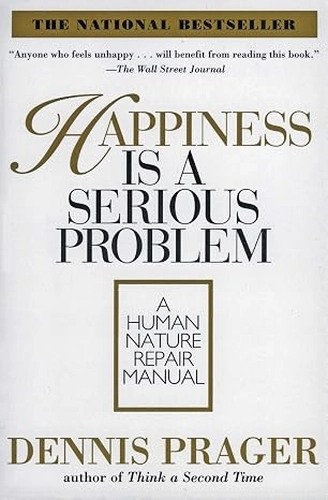
Happiness Is a Serious Problem
A human nature repair manual.
Dennis Prager wrote this book to argue that happiness is not a mood. It is a responsibility. Something you practice. Something you choose.
That sounds simple. It is not. Because the world keeps giving you reasons to be unhappy. People let you down. Plans fall apart. Life is unfair. Prager does not pretend otherwise. He just refuses to let you use those things as an excuse.
The chapter that hit me hardest was about seeing yourself as a victim. Prager argues that victimhood feels good in the moment. It gives you permission to be angry. To give up. But it also takes away your power. If someone else is responsible for your unhappiness, then only they can fix it. And they probably will not.
He writes, “A poor man who can make himself satisfied with his portion will be happier than a wealthy man who does not allow himself to be satisfied.” That line changed how I think about fairness. Life is not fair. But you can still choose how you respond.
This book pairs well with Pierce because it addresses the emotional side of influence. You cannot protect yourself from manipulation if you are desperate for approval. Prager helps you build the inner stability that makes you harder to manipulate.
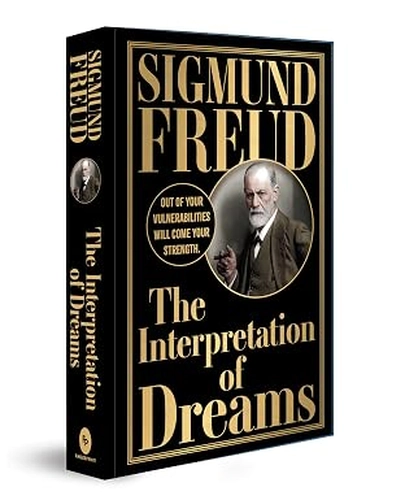
The Interpretation of Dreams
The unconscious mind and the hidden desires beneath the surface.
Sigmund Freud wrote this book over a century ago. It is not a light read. But it is worth the effort because it addresses something none of the other books do. The things people do not admit even to themselves.
Freud argued that our dreams are not random. They are expressions of desires and fears we cannot or will not acknowledge in waking life. The same principle applies to how we behave. We rationalize. We justify. We tell ourselves stories about why we did something. But the real reason is often buried deeper.
I did not read this book for the dream analysis. I read it for the framework. Once you understand that people have hidden motives, even from themselves, you stop taking everything at face value. You start asking different questions. Not “Why did they do that?” But “What might they be protecting?”
That shift in perspective is powerful. It makes you more patient with people. More curious. Less reactive. And it makes you more honest with yourself about your own hidden reasons.
How These Three Books Work Together
Pierce gives you the tools to see what is happening around you. Prager gives you the inner stability to not be shaken by it. Freud gives you the depth to understand why people, including yourself, behave in ways that do not make sense on the surface.
You do not need to read them in a specific order. Start with whichever one addresses your biggest blind spot right now. If you keep getting taken advantage of, start with Pierce. If you keep feeling like a victim, start with Prager. If you keep wondering why people do what they do, start with Freud.
Together, they create a complete picture. The outer game. The inner game. And the hidden game underneath both.
Final Thought
The psychology behind influence and persuasion is not a weapon. It is a lens. One that lets you see your coworker’s ambition more clearly. Your friend’s hidden need for approval. Your own blind spots.
I still do not have all the answers. But I am learning to pause before I react. To ask what someone might be protecting. To hold kindness and clarity in the same hand.
That is the goal. Not to stop trusting people. To trust them with your eyes open.