Hey, I feel you. If you’re reading this, you’re probably exhausted from trying to outrun your own brain. Maybe you’ve tried deep breathing, positive affirmations, or talking yourself down during a panic wave—only to feel the anxiety tighten its grip five minutes later. That’s not a failure of yours. That’s often how anxiety works when you fight it.
The good news? You don’t have to win a battle against your mind to find peace. You just have to stop fighting.
Why Resisting Anxiety Often Makes It Stronger
Let’s get one thing straight: Anxiety isn’t necessarily your enemy. It’s your brain’s overprotective bodyguard—loud, annoying, and convinced you’re in danger even when you’re just sitting on your couch.
But when you push against it? That’s when things go sideways.
The Anxiety Cycle: How Fear Feeds More Fear
Here’s how it usually goes:
- You notice a twinge of anxiety—heart races, chest tightens.
- You think, “Oh no, not again. I need to stop this.”
- Your brain registers that “stop this” as a red alert. If it needs stopping, it must be dangerous.
- More adrenaline. More fear. Loop starts.
That’s the anxiety loop. You’re not anxious just because of the initial trigger—you’re anxious because you’re afraid of being anxious. That second layer of fear is what keeps the engine running long after the original spark is gone.
Why Your Brain Treats Anxiety as a Threat
Your nervous system doesn’t speak English. It speaks survival. When you label anxiety as “bad” and try to suppress it, your amygdala reads that as: “Threat detected. Deploy full defense.”
That’s your fight-or-flight response kicking in—even though there’s no bear in the room.
What’s wild is that the more you try to monitor and control your internal state, the more hypervigilant you become. You start scanning for any sign of unease, which keeps your nervous system on high alert. That’s emotional avoidance in action—trying to escape an internal experience that was never life-threatening to begin with.
Some perspectives on emotional regulation suggest that how we relate to our internal experiences—whether we treat them as threats or as passing events—can shape how intensely they linger. It’s less about the feeling itself and more about the stance we take toward it.
What It Really Means to Accept Anxiety
If you’re anything like I was, you hear “accept anxiety” and think: So I’m just supposed to be miserable forever?
No. Absolutely not.
Acceptance isn’t resignation. It’s not throwing your hands up and saying, “Welp, guess I’ll have a panic attack at the grocery store forever.”
Accepting Anxiety Doesn’t Mean You Want It
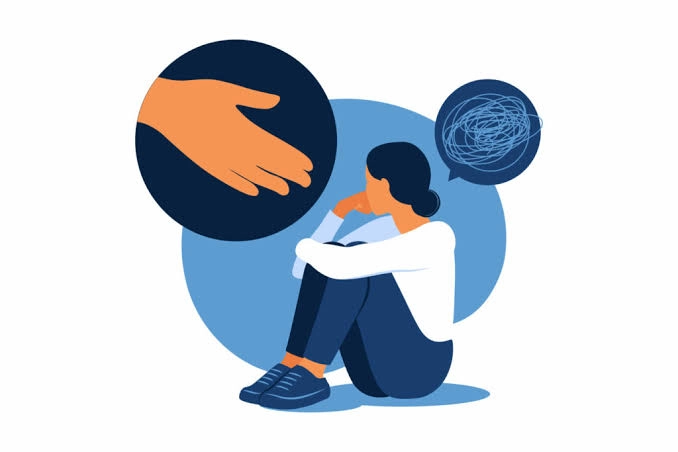
Acceptance means: “This is here right now. I can still choose what I do next.”
Think of it like bad weather. You don’t want it to rain on your picnic. But if it does, you grab an umbrella or move indoors. You don’t stand in the rain screaming at the sky to stop.
Same with anxiety. You can acknowledge it’s there without letting it call the shots.
Acceptance vs. Suppression: What’s the Difference?
Suppression: Pushing feelings down, distracting, avoiding anything that might trigger you.
Acceptance: Letting feelings exist while you continue doing what matters.
Suppression often works—for about 30 seconds. Then the thought comes back stronger. That’s because avoided emotions tend to stick around. Acceptance, by contrast, allows them to rise and eventually fall, without needing your constant intervention.
There’s a framework in certain therapy approaches that highlights a shift from “fighting symptoms” to “changing your relationship with them.” And that shift often changes everything—not by removing the anxiety, but by removing the struggle around it. Many people find that when they stop treating every anxious thought as a problem to solve, they actually free up energy to live more fully.
5 Ways to Stop Fighting Anxiety and Let It Pass
Let’s get practical. Here’s what actually helped me—and what I see work for others.
1. Notice Anxiety Without Judging It
Try this: instead of saying “I’m so anxious, this is awful,” say “I’m noticing a feeling of anxiety.”
That tiny shift creates space. You’re not becoming the anxiety; you’re just observing it. Like watching clouds pass by instead of climbing into the thunderstorm.
2. Stop Trying to Eliminate Every Symptom
Your heart is pounding? Okay. Your palms are sweaty? Not dangerous. The urge to escape? Just a sensation—not a command.
When you stop treating every physical symptom as a five-alarm fire, you stop feeding the alarm system. That’s how you begin to tolerate discomfort without needing to fix it immediately.
3. Allow Physical Sensations to Come and Go
This one takes practice. Sit still and notice where you feel anxiety in your body. Maybe it’s your chest, or your stomach, or your throat.
Just observe it. Don’t try to force it away with relaxation. Don’t brace against it. Let it be there, like background noise. And notice: it changes. It moves. It peaks and then it ebbs.
4. Bring Your Attention Back to the Present
Anxiety lives in the future. So come back to now.
Feel your feet on the floor. Notice the temperature of the air. Listen to the sounds around you. This isn’t about “distracting” yourself—it’s about anchoring yourself in what’s actually happening, rather than what your brain fears might happen.
5. Continue Living Even When Anxiety Is Present
This is the big one.
You don’t wait until you’re calm to live your life. You live your life, and let the calm catch up.
That means going to the coffee shop even if your hands shake. Having the conversation even if your voice wobbles. Showing up for your day even when your nervous system is doing its own thing.
Values-based action means choosing behavior based on who you want to be, not on how you feel in the moment. You can be anxious and brave. You can be anxious and kind. You can be anxious and present.
Common Mistakes People Make When Trying to Accept Anxiety
I’ve made all of these. Maybe you have too.
Mistake 1: Treating acceptance as another way to get rid of anxiety.
If you’re “accepting” but secretly checking to see if it worked, that’s not acceptance—that’s a strategy. And strategies that aim to eliminate anxiety usually backfire.
Mistake 2: Monitoring yourself constantly.
“How anxious am I now? What about now? Is it going away yet?” That hypervigilance keeps you locked in the loop.
Mistake 3: Reassurance seeking.
Asking friends, Google, or yourself over and over: “Is this normal? Will I be okay?” That might provide relief in the moment, but it usually reinforces the idea that anxiety is a danger you can’t handle on your own.
Mistake 4: Putting your life on hold.
“I’ll start living again once this anxiety lifts.” Except anxiety often lifts after we start living, not before.
When Anxiety May Need More Than Self-Help
Acceptance is powerful. But it’s not a substitute for professional support when things get heavy.
Here are some signs that it might be time to reach out:
- Your anxiety has been around for weeks or months without much letup.
- You’re avoiding major parts of your life—work, school, relationships, basic activities.
- You’re having panic attacks that leave you shaken and exhausted.
- Your sleep, appetite, or energy levels have taken a noticeable hit.
- You feel disconnected from yourself, like you’re just going through the motions.
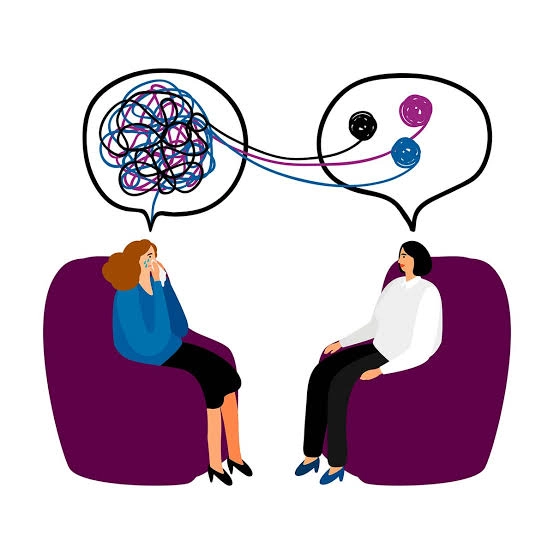
There’s no shame in getting help. In fact, it’s one of the bravest things you can do. Therapy—particularly approaches that focus on acceptance and behavior change—can make a real difference.
FAQ About Accepting Anxiety
Can accepting anxiety actually reduce it?
For many people, it does. Not because acceptance acts as a “quick fix,” but because it removes the extra layer of struggle that makes anxiety stick around. When you’re not fighting it, your nervous system often begins to settle naturally.
Why does accepting anxiety feel so difficult?
Because your brain is wired to avoid discomfort. Acceptance goes against every instinct that says “get rid of this.” But difficulty doesn’t mean you’re doing it wrong—it means you’re practicing something new.
Is it normal to still feel anxious after practicing acceptance?
Absolutely. The goal isn’t to never feel anxiety again. The goal is to stop being controlled by it. You can feel anxious and still have a good day, still take action, still connect with people. That’s the real win.
How long does it take to stop fearing anxiety?
That depends. For some, it shifts slowly over weeks. For others, it’s more gradual. The point is not to rush the process—it’s to keep showing up, one moment at a time.
Sources for reference (you can verify these independently):
Hayes, S. C., Strosahl, K. D., & Wilson, K. G. Acceptance and Commitment Therapy: The Process and Practice of Mindful Change.
Barlow, D. H. Anxiety and Its Disorders: The Nature and Treatment of Anxiety and Panic.
Linehan, M. M. Skills Training Manual for Treating Borderline Personality Disorder. (Distress tolerance and acceptance principles.)
Research on emotional avoidance and its role in anxiety disorders (over 30 years of peer-reviewed work in journals like Behaviour Research and Therapy and Journal of Consulting and Clinical Psychology).
There’s nothing wrong with you. You’re not failing at “calming down.” You’re just caught in a system that runs on fear—and you’ve been trying to fight it with the same fear.
Take a breath. Let the anxiety be there, just for now. And then go make a cup of coffee, call a friend, take a walk, or do whatever tiny thing matters to you.
That small step? That’s peace in the making.