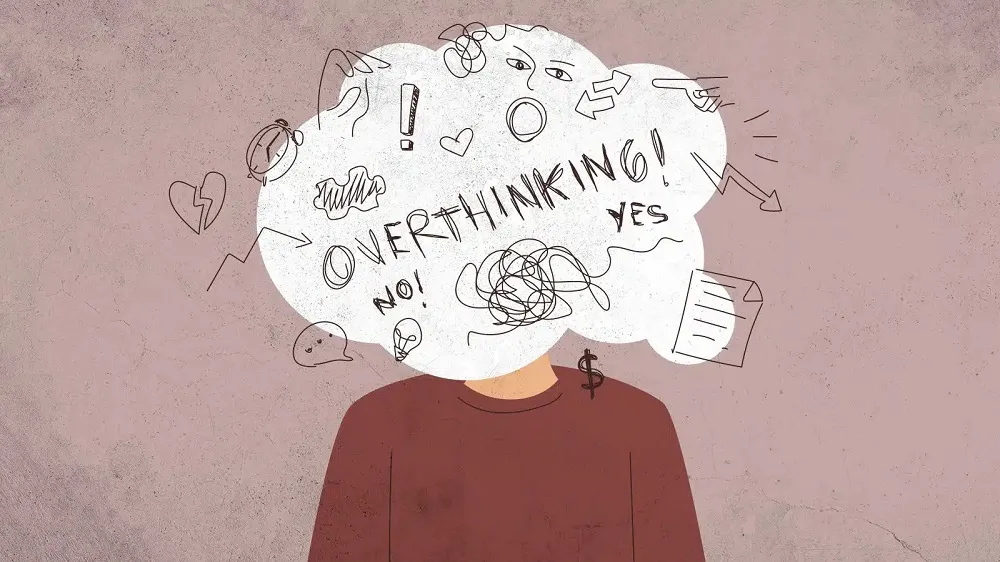
Let’s be real. You lie in bed at 2 a.m. replaying that awkward thing you said in a meeting. Or you spend 20 minutes crafting a text, then delete it. Overthinking is practically a universal pastime. We work hard, we stress hard, and our brains rarely shut off.
Here are 7 rules that actually help—no fluff, no therapy-speak, just real tactics.
1. Set a “worry timer”
Give yourself permission to overthink—but only for 5 minutes. Set a timer. Worry all you want. When it goes off, you’re done. Literally say, “Not now,” to your brain.
I used to be like this. After sending a work email, I kept re-reading it, convinced my tone was off. Then I set a 5-minute timer. When it beeped, I closed my laptop and moved on. Two weeks later, my brain actually learned to stop.
2. Write it down, then close the book
Keep a notebook. Every racing thought goes on paper. Once it’s written, close it. Your brain relaxes because it knows the thought won’t get lost. Think of it like closing a browser tab.
3. Name the loop
When you’re stuck, say out loud: “This is overthinking, not problem-solving.” Problem-solving has an end. Overthinking just spins. Naming it breaks the trance.

4. Do something physical for 2 minutes
Overthinking lives in your head. Move it to your body. Do 15 jumping jacks. Walk to the fridge and back. Splash cold water on your face. Physical action forces your brain to switch channels.
Someone I know struggled with the same thing. He sat in his car before a job interview, too scared to go in. He got out and speed-walked around the parking lot for two minutes. His heart was pumping, but his mind cleared. He said those two minutes saved that interview.
5. The “so what” rule
Ask yourself: “So what if that thing happens?” Then answer. Keep going three times. Example: “I might mess up the presentation. So what? People will think I’m dumb. So what? I’ll feel embarrassed for a day.” See? The world doesn’t end. Most of our fears are just movies we keep replaying.
6. Schedule your “second look”
Tell yourself: “I’ll think about this again tomorrow at 10 a.m.” Most overthinking urges die overnight. By morning, you often don’t even care. And if you still do? You gave it a time slot. That’s responsible, not obsessive.
7. Ask: “Would I tell a friend this?”
If your best friend came to you with this same worry, would you tell them to keep spiraling? No. You’d say “You’re fine. Let it go.” Apply that same voice to yourself.
I used to be like this. I said something at a party that felt stupid and planned to avoid those friends for a week. Then I asked myself: if my best friend did the same thing, would I tell her to cut everyone off? No. So I texted the group chat the next day like nothing happened.
Overthinking isn’t a personality flaw. It’s a habit. And habits can be changed. Pick one rule. Use it today. Your 2 a.m. self will thank you.