Not long ago, I let one careless comment ruin my entire day; anger and hurt would just linger. I’d have important work to do, but my brain kept replaying the same sentence. The more I replayed, the angrier I got. By the time I fell into bed at night, I realized I’d gotten nothing done. And I’d burned through all my energy without even knowing it. Somewhere along the way, I stopped being the master of my emotions. I became their slave.
A lot of people think emotional regulation means “suck it up” or “just get over it.” But real emotional management isn’t about pushing feelings down. It’s about changing the relationship you have with them. The three methods below helped me more than anything else. And they’re all backed by real research.
Why do our emotions keep hijacking us? Three deep psychological reasons
The transfer of control: when you can’t grab the big things, you grab the small ones.
When you get shot down at work, feel powerless in a relationship, or have no idea what’s coming next in your life, your brain automatically looks for something it can still hold onto—like refreshing social media over and over, worrying about how sweet your bubble tea is, or suddenly losing it because someone left a shirt on the floor.
Emotional rumination: your brain loves to “feel worse and worse.”
Psychology research has found that when you’re in a negative emotional state, your brain automatically switches into rumination mode—like a cow chewing its cud, it just keeps chewing on the same bad thing. And every time you chew on it, the pain gets reactivated.
You think you’re trying to “figure it out.” But really, you’re just feeding the emotion and making it bigger.
The island effect: the more alone you are, the heavier the emotion gets.
When you face an emotion all by yourself, it gets blown way out of proportion. There’s no outside feedback to check it against. So your brain automatically assumes: “No one else has ever suffered this much. This thing I’m going through must be incredibly serious.” A lot of the weight of an emotion comes from that suffocating feeling of carrying it alone.
Three methods: using “small certainties” to fight back against “big loss of control”
1. Create “completion” anchors. Use a one minute task to break the emotional loop.
When the emotion starts surging, immediately do something that takes less than one minute and that you can 100% finish. It helps to write a list of options ahead of time. When the emotion hits, just pick one—straighten three things on your desk, count from one to thirty, fold one piece of clothing, or take a sip of water and count to five before you swallow.
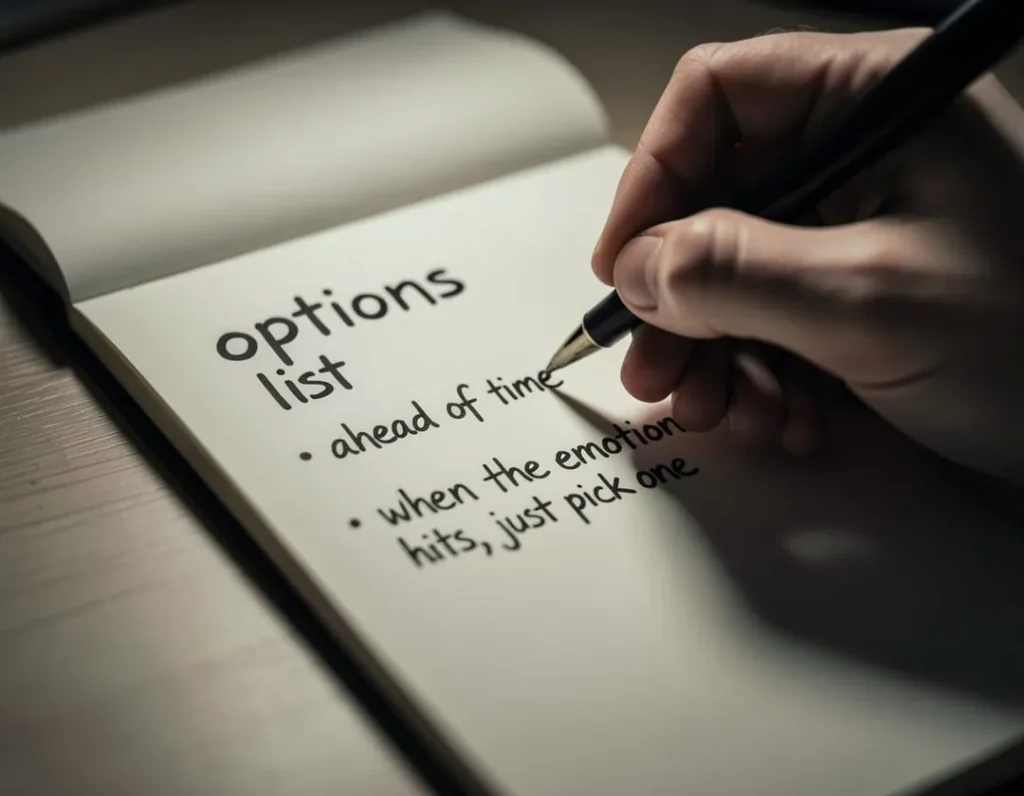
Emotional rumination is a state with no exit. Completing a tiny task sends your brain a “closure signal.” The moment your brain gets that “done” feedback, the momentum of the emotion gets broken.
2. Write a “processing card” for your emotions. Turn the vague into step by step.
Write down a standard processing card for three common emotions ahead of time. Keep it next to your computer or in your phone.
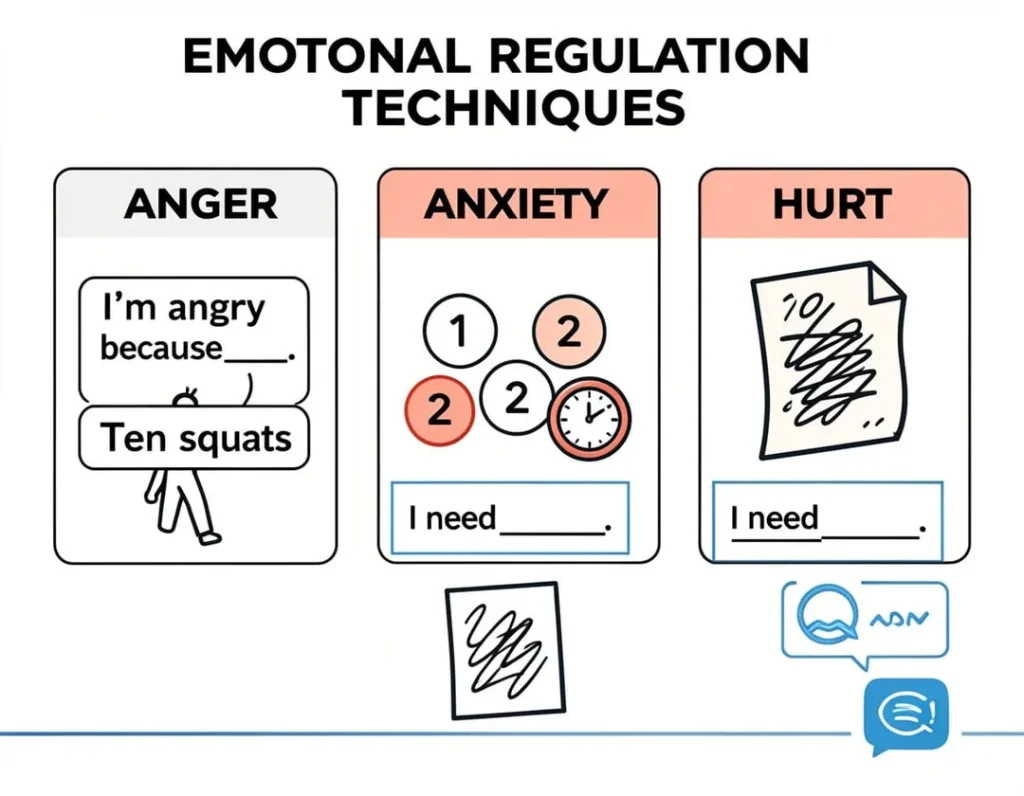
- For anger: leave the current scene. Then write down “I’m angry because ______.” Then do ten squats.
- For anxiety: list “three things I can control.” Do only the first one. Then set a fifteen minute timer.
- For hurt: grab a piece of paper and scribble all over it. Write down “I need ______.” Then send one message to someone you trust.
When an emotion hits, your brain is a mess. But if you have a ready made card of steps, you don’t need to think. You just execute. And the act of executing is itself a form of taking control.
3. Build an “emotional support circle.” Break the loneliness amplification effect.
Find two or three friends or coworkers you can be honest with. Make an agreement. You don’t need to talk every day. You just need to know someone is there.
One idea: agree on a code. Send a that means “I’m having a rough day. No need to reply. Just telling you.”

A more advanced version: set aside fifteen minutes every week. Each person asks just one question—”What was the hardest moment for you this week?”
Emotions aren’t afraid of not being solved. They’re afraid of being alone. The moment you know that someone else knows what you’re going through, even if they don’t do a single thing, your emotional load gets noticeably lighter.
Conclusion: The goal of emotional regulation isn’t calm. It’s being at peace with yourself
We will never get rid of bad emotions. Criticism. Disappointment. Hurt. Anxiety. They’ll keep coming back like the weather. But we can change our relationship with them.
The real goal of emotional regulation training isn’t to become someone who never gets angry or sad. It’s to have a set of reliable tools ready when the emotion shows up—you know you can break the rumination loop with one tiny minute long task, you have an emotion processing card you can just follow, you know that someone out there knows what you’re going through.
These small, certain methods are like anchors scattered through your everyday life. They won’t make the storm disappear. But they will make sure you don’t get swept away.
Starting today, pick one small thing that takes less than a minute. Write it down. The next time an emotion surges up, don’t try to “think your way through it.” Just do the thing.