You know that moment when your partner walks out the door for a trip, and instead of feeling relieved, your chest gets tight? That might be relationship anxiety. It’s not just “missing them.” It can show up as checking your phone every few minutes, even when you know they’re on a flight. Or it can show up as spinning up a whole worst-case scenario because they haven’t texted back in two hours.
Some people describe their heart racing, feeling a little shaky, or getting irritable with themselves for “being this way.” You might know, logically, that nothing is wrong. But the feeling doesn’t care about logic. Experts in attachment theory have pointed out that this kind of emotional response often comes from earlier experiences where closeness wasn’t stable—so your system stays on alert, even in a safe relationship.
Why You Feel So Anxious in Relationships
One common reason is what psychologists call an anxious attachment style. Your brain learned early that love might disappear without warning. It’s not a disorder—just a pattern.
Low self-worth also plays a role. If you don’t fully believe you’re okay on your own, their absence can feel like proof that you’re not enough.
According to interpersonal therapy frameworks, these patterns aren’t about weakness. They’re learned survival strategies that may have helped you once but don’t serve you now.
Is This Normal or a Sign of Relationship Problems?
A little unease when apart is pretty common. The question isn’t whether you feel anxious—it’s how much those feelings control your actions.
Normal dependence sounds like: “I miss them and feel a little off.” Anxious dependence sounds more like, “I can’t focus on anything else until they text back.”
Healthy love leaves room for both people to exist separately. Relationship anxiety shrinks your world down to one person’s availability.
Clinical perspectives on adult attachment suggest that if you can notice the anxiety and still let your partner have space, that’s closer to being secure. If every separation triggers a spiral, it’s worth looking at the pattern, not just the moment.
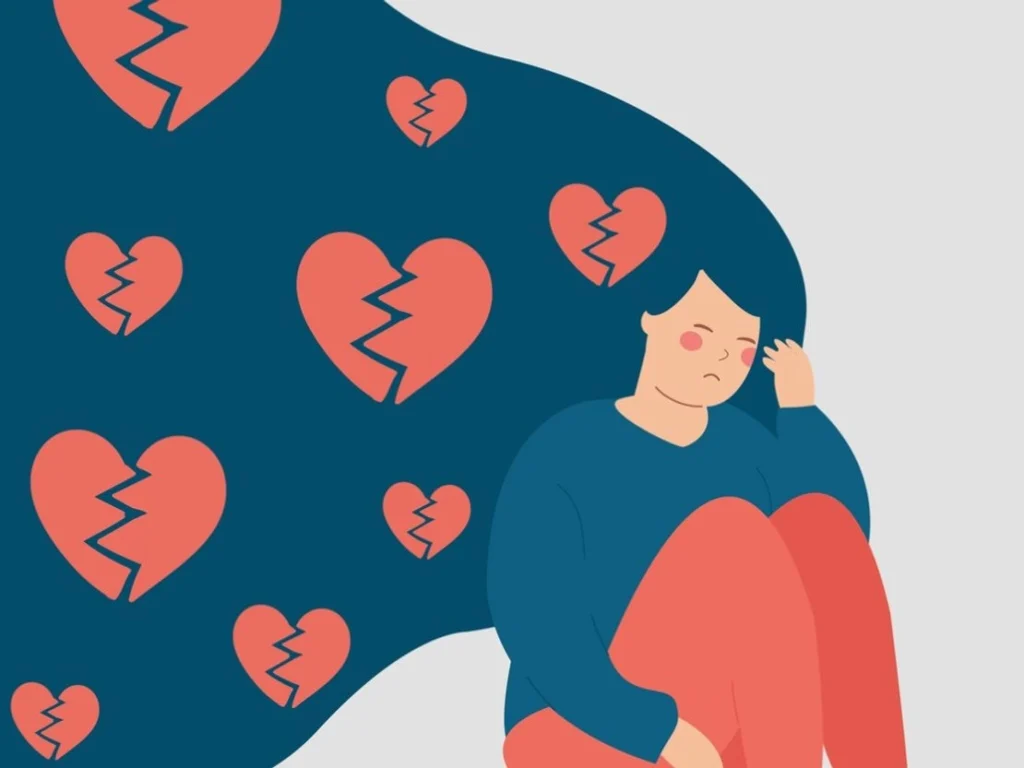
How to Calm Relationship Anxiety in the Moment
When the panic hits—partner hasn’t replied, they’re traveling, you don’t know where they are—here’s what actually helps.
Get Physical and Ground Yourself
Anxiety lives in your body, which is why talking yourself out of it rarely works. Start by feeling your feet on the floor and pressing them down. Touch something cold—a water bottle, a countertop, a window. Then breathe out longer than you breathe in: count to four as you inhale, then six or eight as you exhale.
My friend used to panic when her boyfriend went surfing without service, so she started keeping an orange in the freezer. When the spiral started, she’d hold it for thirty seconds, and the cold snapped her back. Find your version—cold water on your wrists, stepping outside for thirty seconds, or holding a piece of ice.
Pause the Mental Movie
Anxiety takes one fact—”they haven’t texted back”—and turns it into a movie where they’re losing interest, but that’s not reality. It’s a projection. Say to yourself quietly: “I notice I’m storytelling right now.” Just name it. You don’t have to stop it or argue with it. Just notice.
I once dated someone who traveled for work, and I’d imagine he was rethinking everything every few hours of silence. Then I started saying out loud, “That’s a story. I don’t know that,” and hearing my own voice broke the trance. You can also try writing down two columns: “What I’m imagining” and “What I actually know.” The second column is usually very short.
Use a Timer to Contain the Spiral
Sometimes you can’t stop the anxiety—you can only ride it out. But you can give it a boundary. Set a timer for ten minutes and tell yourself that during those ten minutes, you can feel as anxious as you want. Pace, catastrophize, check your phone every thirty seconds.
But when the timer goes off, you do one thing from this list: ground, write, or redirect. The timer gives you permission to feel the anxiety without fighting it (which often makes it worse), and it stops anxiety from taking over your whole evening.
How to Stop Being Emotionally Dependent on Your Partner
Emotional dependency isn’t deep love. It’s when their availability becomes your only source of calm—they text and you’re okay, they don’t and you can’t function.
Delay the Reassurance Check
When you feel the urgent need to ask “are we okay?”—wait. Start with two minutes, then five, then twenty. The urge is strongest in the first few minutes, and if you can ride past that peak, it often drops on its own because your nervous system realizes, “I didn’t die.” Nothing terrible happened.
Build a Self-Soothing List Without Them
You need things that calm you down that don’t involve your partner. Not because your partner is bad, but because one person can’t hold all your emotional regulation. Think about what has actually calmed you down before—not what should, but what has. Maybe it’s making tea and watching the steam, putting on a specific hoodie, calling a friend who won’t talk about relationship drama, taking a ten-minute walk with no phone, or watching two episodes of a show you’ve already seen.
Redistribute Your Life Focus
If your week revolves around when your partner will call or text, you don’t have a relationship problem—you have a center-of-gravity problem. Start adding small things that are yours: a hobby you used to like, a show you watch alone, a goal that has nothing to do with romance, like reading one book a month, learning one new dish, or running a 5K.
What Not to Do When You Feel Anxious
Don’t send multiple texts in a row—that urge to “make sure they see it” usually backfires. Don’t ask “Do you still love me?” every time you feel a wobble; it wears on the relationship and puts your stability in their hands.
Don’t try to control their schedule or location—asking for a call is fine, but demanding constant updates or repeatedly checking their “last seen” feeds the anxiety instead of soothing it. And don’t have big emotional conversations over text; wait until you can talk in person or on a call, because text has no tone and anxiety reads the worst tone into everything.
According to conflict resolution frameworks in couples therapy, these reactive behaviors come from a real need—safety—but the behavior itself often creates the opposite result.
FAQ – Relationship Anxiety
Why do I feel anxious when my partner doesn’t text back?
It might not be about the text itself, but what silence has meant to you in the past. Many people interpret delayed replies as rejection, even with zero evidence.
Is separation anxiety normal in adults?
Some degree is common. It’s worth looking at when it stops you from functioning normally or leads to controlling behavior.
Can relationship anxiety ruin a relationship?
It can, but not always. The risk is usually the behaviors that come with it—constant checking, accusing, endless reassurance-seeking.
How do I stop overthinking about my partner?
Set a “worry window.” Give yourself ten minutes a day to overthink on purpose. Outside that window, gently remind yourself: not now.
Sources:
Adult attachment theory research (Bowlby, Ainsworth frameworks)
Interpersonal therapy models for emotional dependence
Emotion regulation strategies from cognitive behavioral therapy literature
Couples therapy conflict resolution patterns (Gottman method references)