I still remember the afternoon I finished The Art of Thinking Clearly. Rolf Dobelli’s short chapters felt like someone tapping me on the shoulder every few pages. That night I caught myself defending a bad purchase simply because I had already paid for it. Sunk cost, live and in color.
If you have finished that book and felt a little lost, you are not alone. The best cognitive psychology books like The Art of Thinking Clearly do three things. They name your mental blind spots, they show you real examples, and they leave you with something to try tomorrow. Here is one I keep returning to.
Quick Answer: What should I read after The Art of Thinking Clearly?
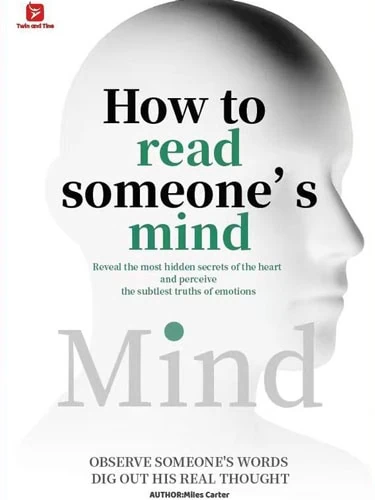
How to Read Someone’s Mind by Miles Carter. Where Dobelli covers thinking errors, Carter covers the signals people send without realizing it. It is practical, fast, and built for real conversations.
Why Do These Books Hit Differently Than a Research Paper?
Cognitive psychology books that actually work share a common shape. Each chapter lands one idea. They use stories from daily life, not lab jargon. And they respect your time.
Dobelli’s format works because it mirrors how we actually learn. One bias, one story, one takeaway. When a book tries to cover everything at once, I forget it all by Friday.
Most of us do not need a textbook. We need a mirror. The right book shows us our own thinking, slightly distorted, and lets us laugh before we wince.
Why How to Read Someone’s Mind Belongs on This List
Most cognitive psychology books focus on how you think. How to Read Someone’s Mind focuses on how you read other people. That is a different skill, and honestly, a more useful one in daily life.
The book is a practical guide to understanding what people reveal without saying a word. It covers facial expressions, body language, vocal tone, and situational behavior. It breaks down the psychological meaning behind small details like eyebrow flashes, eye contact, sitting posture, and hand gestures.
What I appreciated most is that it does not stop at theory. It gives you concrete signals to watch for. A forced smile. Avoiding eye contact. A sudden change in posture. Small nervous movements. These are the cues that reveal discomfort, anxiety, anger, or insecurity before anyone says a word.
The book also goes deeper into personality patterns. It covers behavioral types like the chronic gossiper, the over-cautious type, dominant personalities, and the emotionally immature. Once you see those patterns, you cannot unsee them. And that changes how you handle people.
What You Actually Learn From It
- How to read body language and nonverbal cues in real time
- How to understand hidden emotions and intentions
- How to recognize behavioral patterns and personality traits
- How to communicate more effectively at work and in relationships
- How to build stronger connections through better understanding
It is not about becoming a mind reader. It is about paying attention to what people are already showing you.
Other Books Worth Your Time
Thinking, Fast and Slow by Daniel Kahneman. The deep version of what Dobelli summarized. Two systems of thought, one fast and intuitive, one slow and deliberate. Dense but rewarding.
The Black Swan by Nassim Nicholas Taleb. Taleb writes like he is arguing with you at dinner. His core point is that we build neat stories around messy, unpredictable events.
Predictably Irrational by Dan Ariely. Clever experiments that expose how oddly we behave around money, choices, and free stuff.
Influence by Robert Cialdini. Six principles of persuasion, explained with stories. Once you see the levers others pull, you cannot unsee them.

How Should You Actually Read These Books?
There is a wrong way and a right way. The wrong way is to speed through. You finish the book, feel smart for a week, and forget the chapters.
The right way is slower. One chapter a day. After each one, write down one place you saw that bias or signal in your own life that day. It sounds simple. It works.
After reading the chapter on confirmation bias in Kahneman’s book, I noticed I only read movie reviews from critics who already agreed with my taste. That one observation changed how I pick films.
The One-Signal-a-Day Habit
This is a small ritual I have kept for two years now.
Each morning, pick one concept. Read the chapter. Then keep a running note on your phone. Every time you catch that bias or signal in action, type one line. No judgment, no fixing. Just noticing.
Why it works. Attention is the whole game. You cannot correct a pattern you never see. The note becomes a mirror. After a month, you will have thirty entries. After a year, you will have a portrait of your own mind.
A Few Last Thoughts
These books do not make you smarter in the way a test measures. They make you slower in the way that matters. Slower to react, slower to believe a story just because it is tidy.
Dobelli once wrote that avoiding stupidity is easier than seeking brilliance. That line has stayed with me longer than any productivity hack. Reading these books is a small, steady practice of avoiding stupidity. One chapter, one day, one caught thought at a time.
References
- Carter, Miles. How to Read Someone’s Mind: Understand People in Under a Minute.
- Dobelli, Rolf. The Art of Thinking Clearly. Harper, 2013.
- Kahneman, Daniel. Thinking, Fast and Slow. Farrar, Straus and Giroux, 2011.
- Cialdini, Robert. Influence: The Psychology of Persuasion. Harper Business, 2006.