Have you ever walked away from a conversation and immediately thought, “I should have said that differently”?
Maybe you tried to give feedback and the other person became defensive. Maybe you wanted to explain your feelings but your words came out harsher than you intended. Or maybe you wanted to connect with someone new but the conversation quickly lost momentum.
Many people assume that good communication is something you are either naturally good at or not. But conversation is a skill. Like any other skill, it can be learned, practiced, and improved.
The best books for better conversations do not simply teach you how to talk more. They teach you how to choose better words, understand other people, listen more effectively, and handle difficult moments with confidence.
In this guide, we explore three communication books that approach conversation from different angles: expressing yourself clearly, building social connections, and navigating high-stakes discussions.
Quick Answer: Best Books for Better Conversations
- Best for choosing the right words: Say It Right Every Time by Miles Carter
- Best for social confidence: How to Talk to Anyone by Leil Lowndes
- Best for difficult conversations: Crucial Conversations by Kerry Patterson, Joseph Grenny, Ron McMillan, and Al Switzler
1. Say It Right Every Time by Miles Carter
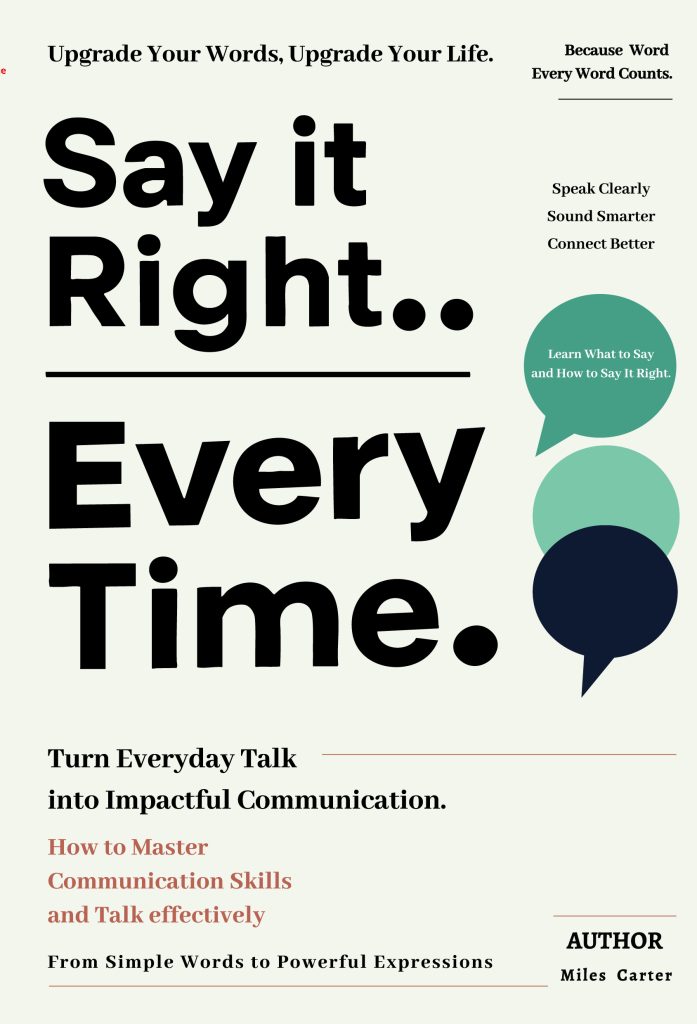
Many communication problems are not caused by a lack of good intentions. They happen because the way we express ourselves does not match what we actually mean.
Say It Right Every Time by Miles Carter focuses on one of the most practical parts of communication: choosing words that create better outcomes.
The book explores how the same message can create completely different reactions depending on how it is delivered. A statement can sound defensive or confident. A request can create resistance or cooperation. Feedback can damage a relationship or strengthen it.
One of the most useful parts of the book is its comparison-based approach. It shows ineffective communication patterns next to stronger alternatives, making it easier to understand how small wording changes can completely shift a conversation.
Instead of simply telling readers to “communicate better,” the book provides practical language patterns that can be applied in real situations.
This makes it especially helpful for people who often replay conversations afterward and wonder what they should have said differently.
Why It Works:
- Focuses on practical communication examples
- Helps you express ideas more clearly
- Reduces unnecessary conflict caused by wording
- Provides useful scripts for everyday situations
2. How to Talk to Anyone by Leil Lowndes
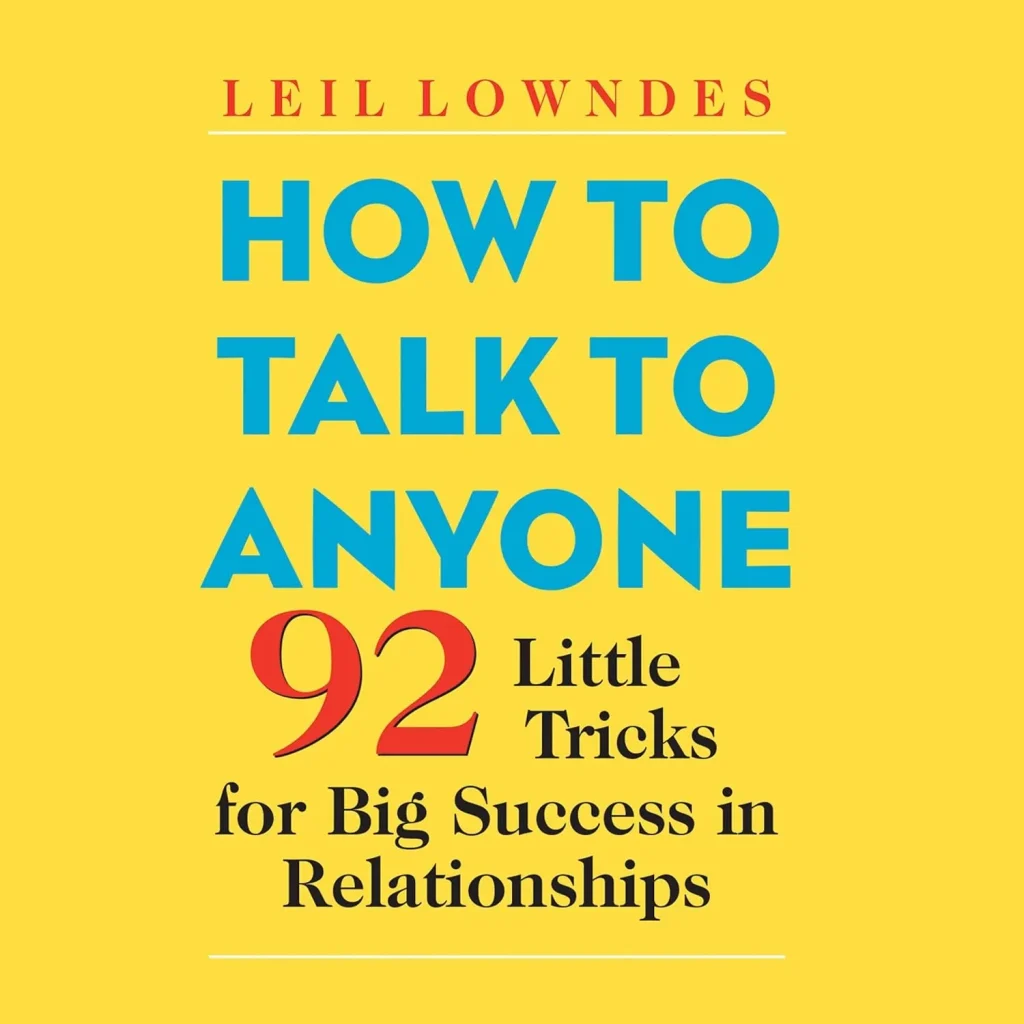
Some people seem naturally comfortable in conversations. They know how to start talking, keep discussions flowing, and make others feel relaxed.
How to Talk to Anyone by Leil Lowndes breaks down the small behaviors that make social interactions easier.
The book covers practical techniques for creating better first impressions, improving small talk, reading social situations, and building connections with different types of people.
What makes this book useful is its focus on specific actions. Instead of giving general advice like “be more confident,” it provides concrete ideas that readers can try immediately.
For example, improving eye contact, showing genuine interest, and asking better questions can completely change the feeling of a conversation.
This book is especially valuable for people who feel awkward in social settings or struggle with knowing what to say when meeting new people.
Why It Works:
- Provides practical social communication techniques
- Helps improve confidence in conversations
- Makes networking and small talk easier
- Focuses on real-world interactions
3. Crucial Conversations by Kerry Patterson, Joseph Grenny, Ron McMillan, and Al Switzler
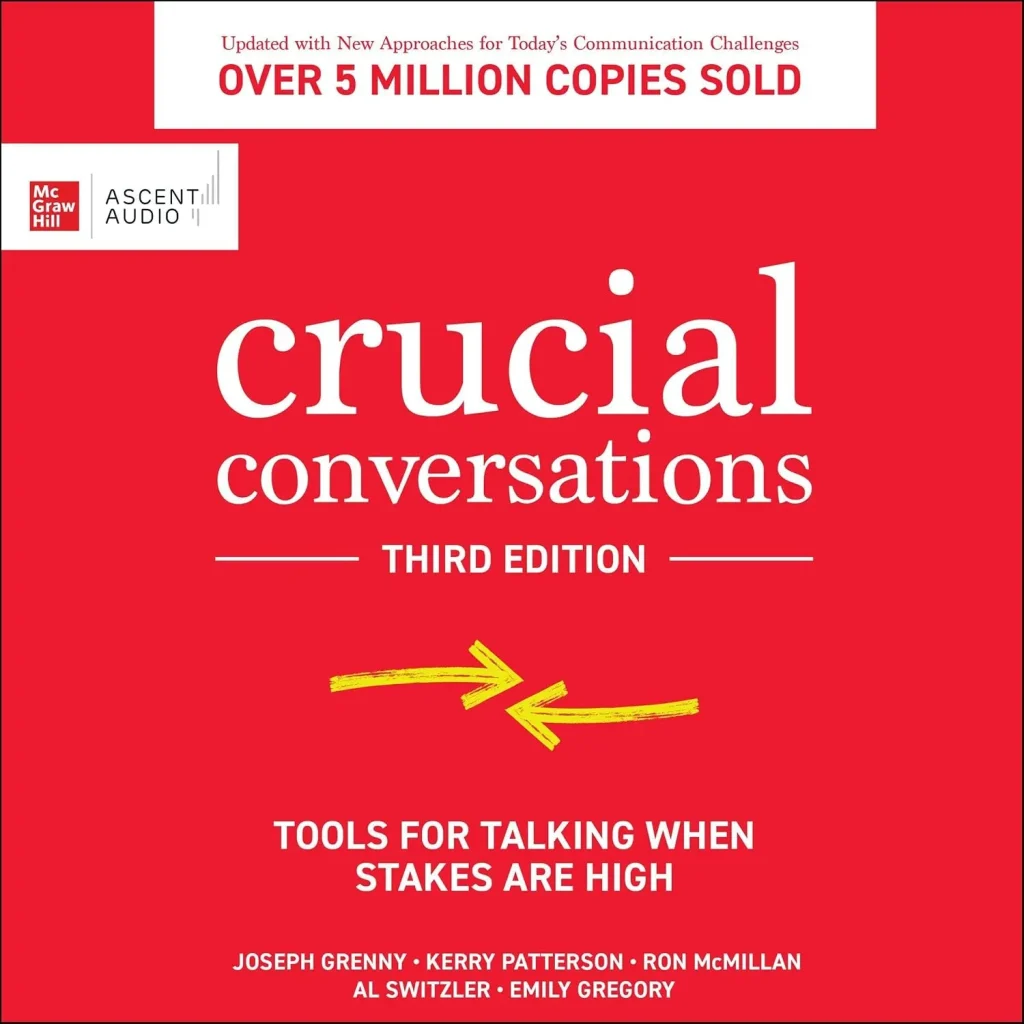
Some conversations are easy. The difficult ones are where communication skills matter most.
Crucial Conversations focuses on conversations where emotions are high and the outcome really matters.
These situations appear everywhere:
- Giving difficult feedback at work
- Discussing problems in relationships
- Expressing disagreement respectfully
- Addressing misunderstandings
The book explains that people often struggle in important conversations because they feel forced to choose between being honest and maintaining the relationship.
Instead, the authors introduce strategies for creating a safe environment where people can communicate openly while still respecting each other.
The most valuable lesson is that effective communication is not about winning an argument. It is about creating understanding and finding solutions together.
Why It Works:
- Helps manage emotionally difficult conversations
- Improves conflict resolution skills
- Teaches respectful ways to express disagreement
- Works for both personal and professional relationships
How These Books Improve Your Conversations
Better conversations are not created by talking more. They come from understanding how communication works.
These three books focus on different parts of the conversation process:
- Say It Right Every Time helps you choose better words.
- How to Talk to Anyone helps you create stronger social connections.
- Crucial Conversations helps you handle important and difficult discussions.
Together, they cover the full communication journey: expressing yourself, connecting with others, and solving problems when emotions are involved.
Which Communication Book Should You Read First?
The best starting point depends on your biggest communication challenge.
If you often know what you want to say but struggle to express it clearly, start with Say It Right Every Time.
If you feel uncomfortable starting conversations or building new connections, How to Talk to Anyone is a practical choice.
If your biggest challenge is conflict, difficult feedback, or emotional conversations, Crucial Conversations provides the tools you need.
Many people will benefit from reading all three because communication requires different skills in different situations.
Frequently Asked Questions
What are the best books for improving communication skills?
Some of the best books for improving communication include Say It Right Every Time, How to Talk to Anyone, and Crucial Conversations. Each book focuses on a different aspect of communication, from everyday conversations to difficult discussions.
Can communication skills really be learned?
Yes. Communication is a skill that improves through awareness and practice. Learning how to listen, choose better words, and understand others can significantly improve your conversations.
What book should I read if I am bad at conversations?
If you struggle with knowing what to say, Say It Right Every Time is a good starting point because it focuses on practical ways to express yourself more effectively.
How can I become better at difficult conversations?
Learning to stay calm, listen carefully, and express your thoughts clearly can improve difficult conversations. Books like Crucial Conversations provide frameworks for handling emotionally challenging situations.
Final Thoughts: Better Conversations Start With Better Awareness
Good communication is not about having the perfect words all the time. It is about understanding yourself, respecting others, and creating conversations where both people feel heard.
The best books for better conversations help you develop different parts of this skill. They teach you how to express your thoughts, connect with people, and handle challenging moments with more confidence.
Better conversations lead to better relationships, stronger teamwork, and a deeper understanding of the people around you.