Last month, my friend Lena sat on my couch, tears streaming. Her boyfriend of three years had just left. She talked for hours, naming every shade of hurt. Two weeks later, she started to heal.
I thought of my friend Marcus, whose breakup two years ago still sits behind his eyes. He rarely speaks of it.
Watching them, I asked myself the same question so many people do: are girls more emotionally attached than boys?
The short answer is: not necessarily. Emotional attachment is not determined by gender alone. What often differs is how people are taught to recognize, express, and process emotions.
The real story, I think, lives in the silences we were taught.
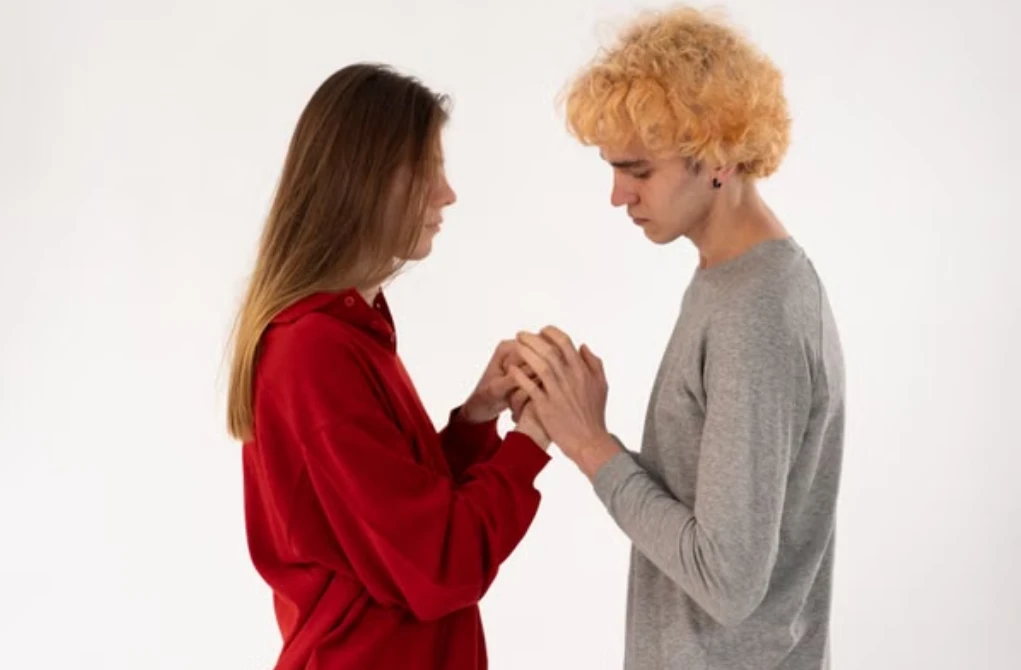
Why Does It Seem Like Girls Get More Emotionally Attached Than Boys?
I remember being a boy and hearing, “Stop crying, be a man.” Girls around me heard something else entirely. “Come here, tell me how you feel.”
This is not simply biology. It is also a quiet classroom we barely notice.
From a young age, many girls are encouraged to talk about emotions and explore what they feel. Many boys, meanwhile, learn to appear composed before they fully understand their own emotions.
We sometimes hand boys silence and call it strength. We sometimes mistake emotional restraint for confidence. Slowly, the emotional vocabulary some girls develop can become unfamiliar territory for many boys.
It is not necessarily that girls feel more. In many cases, they may simply receive more encouragement to notice and express emotions.
Emotional attachment is not some innate female superpower. It is a skill built through thousands of small conversations: “Did that upset you?” “What do you need right now?”
Some boys receive less practice with these conversations. They may learn that their value comes from what they can provide, achieve, or fix. No one teaches them to sit with their own ache.
So when relationships end, some men may not have the same tools to process the loss openly. They may push through pain without having the language to describe it.
That silence can be mistaken for a lack of attachment.
It is not always a lack of caring. Sometimes it is simply attachment expressed differently.
Some research has explored how hormones and physical intimacy may influence feelings of bonding. However, emotional attachment is shaped by many factors, including personality, past experiences, relationship quality, and emotional awareness.
Physical closeness may influence how people experience connection, but it does not determine who is capable of deeper attachment.
How Can We Untangle Real Emotional Depth From Social Habit?
So here is the practical question: how do you, as an adult, start to separate what you actually feel from what you were conditioned to show?
I stumbled into this work myself after a friendship ended and I felt nothing for six months. Then one random Tuesday, I collapsed.
I had mistaken numbness for maturity.
Many of us do.
The first step is brutally simple.
Start naming your feelings out loud, even when you are alone.
I know it sounds absurd. The first time I tried it, I sat in my car and said, “I feel hollow. And underneath that, I feel afraid I am not enough.”
It felt fake.
But slowly, the words became a bridge to myself.
Emotional attachment grows from that kind of honest attention. Some people learn this through close friendships, supportive families, or relationships where emotions are openly discussed.
Others have to build that skill intentionally later in life.
A Simple Practice: The Emotional Echo Walk
I call this the Emotional Echo Walk.
It is a weekly ritual I now recommend to anyone trying to understand their own attachment style, regardless of gender.
Once a week, take a twenty-minute walk alone. No phone. No music.
As you walk, recall one moment from the past few days that stirred something in you.
A tense conversation, a look from a partner, a moment of unexpected joy.
Say to yourself: “When that happened, I felt ______.”
Then pause.
Do not edit. Let the word come.
Then ask: “And what else?”
Dig one layer deeper.
If you felt anger, what sat underneath?
Hurt? Fear? Shame?
Walk with that second feeling for a while. Notice where it lives in your body.
Just notice.
This is not therapy. It is practice.
It is the emotional equivalent of learning a few phrases in a new language.
Over time, you start to recognize your own emotional patterns.
You become more connected to your own inner life, and that often makes you more capable of building healthy attachment with others.
This ability is not limited by gender. Anyone can develop it with awareness and practice.
Where Does This Belief Come From, Really?
My mother talked about her feelings the way other people talk about the weather. It was just part of the atmosphere.
My father, on the other hand, swallowed his until they turned into a quiet distance.
I watched this pattern and learned it without a word being said.
That is where the belief comes from.
It is passed down like a family habit no one intentionally chooses.
Many women may grow up with more opportunities to talk about emotions, while many men may grow up learning to handle difficult feelings privately.
But these patterns are learned, not permanent.
We are all shaped by the emotional environments we grow up in, and those patterns can change.
What About the Body’s Role? The Chemistry of Closeness
It feels odd to talk about hormones in a personal essay, but I cannot ignore that the body can influence how people experience connection.
Some research has explored how physical intimacy and bonding-related hormones may affect feelings of closeness.
But emotional attachment is not created by chemistry alone.
Real attachment is also built through trust, shared experiences, communication, and the choice to keep paying attention to another person.
Biology may influence some parts of connection, but it does not decide who is capable of deep emotional attachment.
Can Men Really Rewire Their Emotional Attachment?
Yes, and I am living proof, however slowly.
Three years ago, I could not have written this.
I would have intellectualized everything and felt nothing.
I started small.
I told a male friend I was struggling and watched him not run away.
I wrote down one feeling each night before bed.
I stopped treating vulnerability as a weakness and started seeing it as honesty.
The shift was not dramatic.
It was like learning to hear a frequency I had always tuned out.
Now, my attachments run quieter, but they run deeper.
I do not cling out of fear. I hold on because I know what I value.
That kind of emotional depth is not feminine or masculine.
It is simply human.
Frequently Asked Questions
Do girls naturally get more emotionally attached than boys?
No. Emotional attachment is not determined by gender alone.
People may appear differently attached because they are taught different ways of expressing, processing, and communicating emotions.
Some people show attachment through words and emotional conversations. Others show it through actions, loyalty, or consistency.
What role does upbringing play in emotional attachment?
A significant role.
The emotional environment someone grows up in can influence whether they learn to openly discuss feelings, understand their needs, and communicate vulnerability.
However, these patterns can change throughout life.
Can boys learn to be more emotionally open?
Absolutely.
Emotional awareness is a skill, not a fixed personality trait.
With practice, anyone can become better at noticing emotions, communicating needs, and building deeper connections.
Can two people of the same gender have very different attachment styles?
Yes.
Personality, past experiences, family background, and relationship history all influence emotional attachment.
Gender is only one small part of a much bigger picture.
How does emotional attachment affect adult relationships?
Healthy emotional attachment creates trust, intimacy, and security in relationships.
When someone struggles to express emotions or communicate their needs, it can create distance. But these patterns can improve through self-awareness and honest communication.
In the end, watching Lena heal on my couch, I realized her tears were not weakness.
They were a language.
Marcus carries his pain differently, but it does not mean he cared less.
The real question is not who attaches more.
It is who was given the words to understand what they feel.
And those words can be learned by anyone, at any age.