The house is quiet. The kids are finally asleep. I should be exhausted. Instead, I am lying there, staring at the ceiling, and my brain decides this is the perfect moment to replay every awkward conversation from the last three years. Daytime me can shrug things off. Nighttime me spirals.
I remember one Tuesday night specifically. I had a good day. Productive. Patient. Then at 11:42 PM, I started worrying about a school form I filled out wrong. A form. In that moment, it felt like the end of the world.
Why does this happen? And more importantly, what actually works to stop it?
Quick Answer: Why is anxiety worse at night?
Anxiety spikes at night because there are no distractions, cortisol levels drop, and your mind fills the silence with worries. It’s a biological and environmental shift that makes anxious thoughts feel louder.
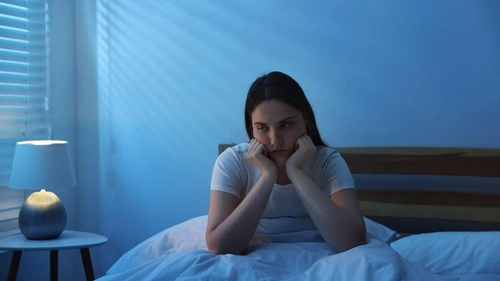
Why Does My Anxiety Spike at Night?
There is real biology behind it. Your body produces cortisol to keep you alert during the day. At night, those levels drop. For some of us, that drop makes us feel unmoored—like we lose the ability to manage anxious thoughts.
There is also the distraction problem. During the day, your mind is occupied. At night, there is nothing to redirect your attention. You notice things you normally ignore. A racing heart. Tense shoulders. And then the thought arrives. You cannot sleep, so you worry about not sleeping. Which makes you more awake. Which makes you more anxious.
Lack of sleep increases mental distress. The less sleep you get, the more anxious you feel. So it becomes a loop. You are anxious, so you cannot sleep. You cannot sleep, so you are more anxious.
How to Stop Anxiety at Night Long Enough to Sleep
You cannot just tell your brain to be quiet. I have tried that. It does not listen. What works better is giving your brain a different job. Something physical. Something boring enough that it cannot argue.
The 10-Minute Brain Dump. Before you get into bed, take a notebook. Write down every worry that is circling. Do not edit. Do not organize. Just get it out of your head. Then close the notebook and tell yourself: “These worries are stored now. I can pick them up tomorrow.”
If you are already in bed and the spiral starts, get up. Go sit in the kitchen. Drink water. Look at something boring. The goal is to interrupt the pattern.
The 4-7-8 Breathing Count
People told me to breathe. I rolled my eyes. But I tried it out of desperation one night, and I was wrong about it. Here is the version that worked. Breathe in through your nose for 4 counts. Hold for 7 counts. Exhale slowly through your mouth for 8 counts. Repeat four times.
The first time I did it, nothing happened. The second time, my heart stopped feeling like it was trying to escape my chest. By the fourth round, my shoulders dropped. It is not about forcing the anxiety away. It is about giving your body a signal that you are safe.
When Your Toddler Wakes Up at 2 AM
This is the part nobody warns you about. You are lying there, finally starting to calm down, and then you hear it. Small feet. Or a cry through the baby monitor.
My daughter woke up at 2 AM every single night for three weeks. I stopped trying to make her go back to sleep quickly. I stopped checking the clock. I just sat with her in the dark and breathed. In for 4. Hold for 7. Out for 8. She eventually fell asleep on my lap. And when I put her back in her crib, I went back to my own bed and slept.
Caffeine and Screens
On days when I have coffee after 2 PM, my nighttime anxiety is louder. On nights when I look at my phone in bed, my brain takes longer to wind down. Caffeine can trigger anxiety symptoms, and screens keep your brain in an alert state.
I replaced my evening scroll with something boring. Folding laundry. Or reading a book with a plot. Something that gives my brain a story to follow instead of a worry to chew on.

When to Talk to Someone
There is a difference between occasional bad nights and a pattern that is affecting your life. If you are dreading bedtime because you know the anxiety is coming, that is worth paying attention to. If you have experienced a traumatic event and your nighttime anxiety has gotten worse, it is worth talking to someone.
There is no shame in getting help. I have talked to a professional about my own anxiety. It gave me tools. And sometimes, just saying the worry out loud makes it smaller.
One Last Thing
The house is quiet now. The kids are asleep. And some nights, I still lie awake. But I have a notebook. I have a breathing pattern. And I have stopped fighting the anxiety so hard.
You are not broken. Your brain is just trying to protect you from threats that do not exist. The worry that feels enormous in the dark usually looks manageable in the daylight. The sleepless night will not last forever. It never does.