You know the feeling.
You say something in a meeting. The words leave your mouth. And immediately, you start analyzing. Did that sound stupid? Did I talk too long? Did I interrupt someone? You replay the moment over and over, searching for evidence that you messed up.
Or maybe a friend sent a text with just the word “okay.” That’s it. Three letters. And you’ve been staring at it for ten minutes, wondering what they really mean.
Overthinking is not the same as thinking. Thinking is productive. Overthinking is a loop. It doesn’t lead to solutions. It leads to more overthinking. It’s anxiety disguised as problem-solving.
If you’re ready to stop spinning, these three books each offer a different way out.
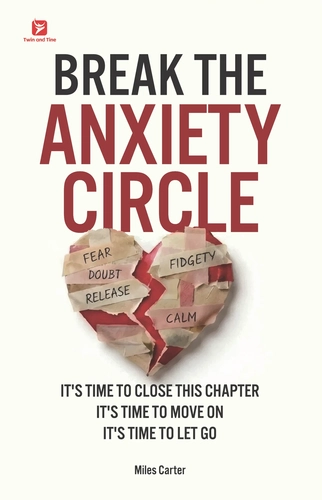
1. Break the Anxiety Circle by Miles Carter
A practical guide to breaking the loop when it’s happening right now.
This is not a book about why you overthink. It’s a book about what to do when it’s happening.
Carter covers the specific patterns that keep people trapped: the endless what-ifs, the conversations you can’t let go, the need to analyze every word. The chapters are direct. Overthinking Will Kill Your Peace. Action Is the Antidote to Anxiety. Stop Letting Tomorrow’s Worry Steal Today’s Peace.
The book doesn’t ask you to stop thinking. It asks you to recognize when thinking has stopped being useful—and to redirect your energy before you spiral.
What makes this book essential is the practicality. It gives you a framework for catching yourself in the moment, naming what’s happening, and choosing a different response. It’s not about understanding overthinking. It’s about stopping it.
For anyone who needs tools they can use right now.
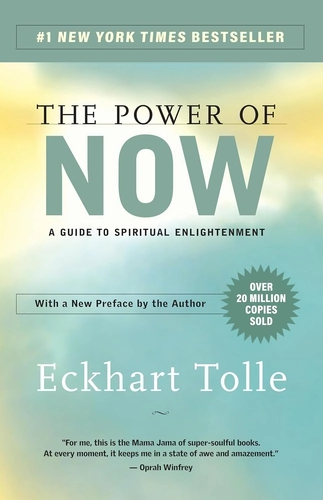
2. The Power of Now by Eckhart Tolle
The book that helps you step out of your mind entirely.
Most people assume overthinking is just how their brain works. They think they can’t control it. They believe the endless mental chatter is just “who they are.”
Tolle argues the opposite. You are not your thoughts. The voice in your head that keeps analyzing, worrying, and replaying is not you. You are the awareness that notices that voice.
This book teaches you to observe your thoughts instead of being consumed by them. To step out of the constant mental chatter and into the present moment. To recognize that anxiety lives in the future—but the future is not real yet. The only moment that actually exists is now.
For anyone who wants to understand the root of the loop.
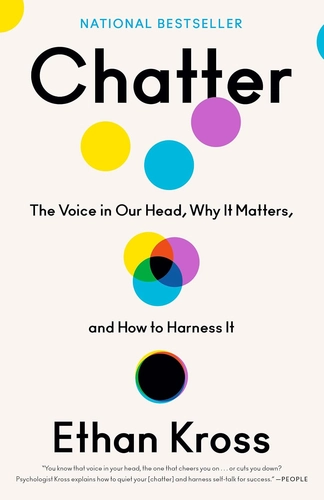
3. Chatter by Ethan Kross
The book that explains why your inner voice never stops.
Kross is a psychologist who studies the inner voice—the constant narration that runs through your head. He calls it “chatter” when that voice turns negative, looping on the same worries and regrets.
The book explains why your inner voice doesn’t shut up. Why it keeps replaying conversations. Why it magnifies small problems. Why it makes you feel worse instead of better.
More importantly, Kross gives you practical strategies for quieting the inner voice. How to distance yourself from your thoughts. How to reframe your internal monologue. How to stop the chatter before it takes over.
For anyone who wants to understand why their mind keeps running.
These three books each offer a different entry point. Carter gives you a practical framework for breaking the cycle in real time. Tolle helps you step back from your thoughts entirely. Kross explains why your inner voice keeps running.
If you’re stuck in the loop right now and need something practical immediately, start with Break the Anxiety Circle. The other books help you understand the loop—this one helps you stop it.
| Best for | |
|---|---|
| Break the Anxiety Circle | Breaking the loop in real time |
| The Power of Now | Stepping back from your thoughts entirely |
| Chatter | Understanding and quieting your inner voice |
Frequently Asked Questions
Which book should I read first?
If you’re exhausted and need something practical right now, start with Break the Anxiety Circle. It gives you the tools to interrupt the loop when it starts.
Can I actually stop overthinking, or is it just how I am?
You can stop the loop. Not by trying to stop thinking—that doesn’t work. By recognizing when thinking has stopped being useful and redirecting your attention.
What if I’ve tried other books and they didn’t work?
Overthinking is a pattern, not a lack of knowledge. If you already understand why you overthink but still can’t stop, Break the Anxiety Circle is the book you need—it focuses on the moment it’s happening.