The phone rings, but your heart sinks.
That line has made people laugh for years. They think I am joking. They do not know I mean every word.
For some of us, a ringing phone is not a simple sound. It feels like a starting pistol. My mind races. What if I say something stupid? What if they are rude and I freeze? What if my voice comes out in that tight, high pitch I cannot control?
Casual conversation, the kind others seem to do effortlessly, feels like a performance. Real life has no script. You cannot pause to fix a mispronounced word. You cannot edit yourself in real time.
Can you imagine saying, “Sorry, I said that wrong. Let me rewind and try again so I sound cooler”? Of course not.
This pressure, this fear of being judged in the moment, is at the heart of what many of us feel. It is not really a fear of the phone itself. It is a fear of being heard, live, without a safety net.
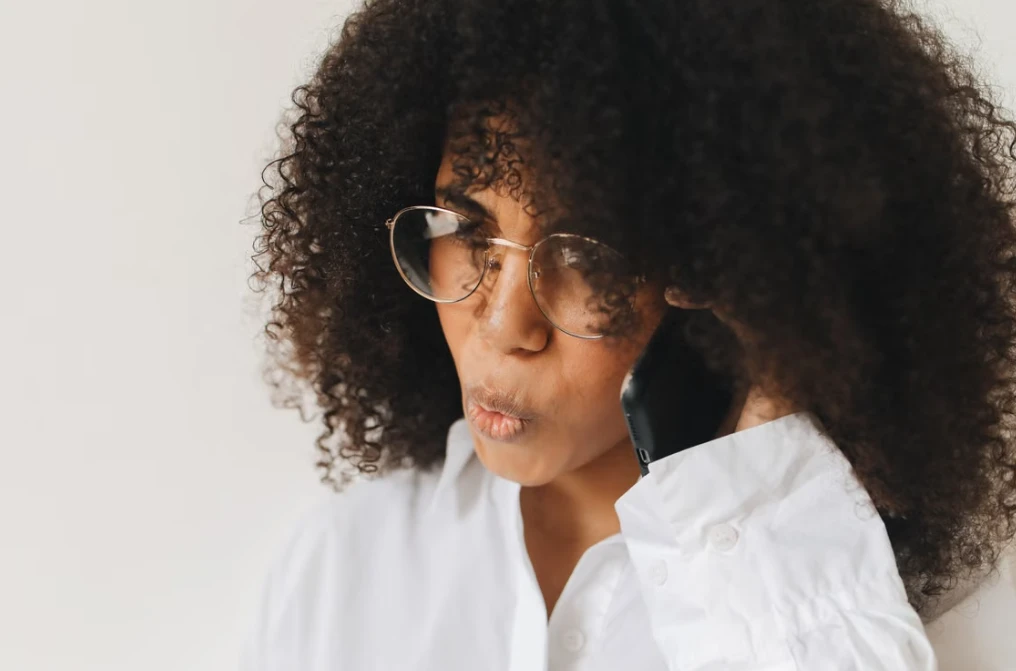
What’s Really Behind the Fear of Phone Calls?
Why does my body react before I even say hello?
The moment that ringtone cuts through the quiet, my stomach tightens. It is not a logical choice. It is a reflex.
The core of this anxiety is rarely about the device. It is about the lack of control.
On a call, you lose many of the tools we have all come to rely on. You cannot see their face. You cannot read their body language. A slight pause from them does not necessarily mean anything, but to an anxious mind, that pause can feel like judgment.
I remember being a teenager, sitting by the kitchen landline with its long, twisted cord. The kitchen was the family’s central hub, which meant every call I made felt like it had an audience.
My parents thought tough love would fix my phone avoidance. They made me answer every call. It did not fix me. Instead, I became even more on edge whenever the phone rang.
Picking up the receiver, my palms would sweat. My voice would rise.
“Why are you being weird?” they would ask.
Their words created a quiet belief inside me: I was different, and not in a good way.
The fear comes from a simple human place. We are afraid of sounding foolish in a conversation we cannot control. We imagine a bad connection, an irritated voice on the other end, or the embarrassment of not knowing what to say.
Making a call can feel like stepping into the spotlight when you never auditioned for the role.
How to Get Over Phone Call Anxiety: A Practical Path to Feeling Steadier
Learning how to get over phone call anxiety is not about becoming a smooth-talking extrovert overnight.
It is about finding small, steady footholds.
The goal is not to erase the feeling completely. The goal is to stop letting the feeling make the decision for you.
For me, the turning point came when I stopped trying to be “good on the phone” and started preparing for the anxiety itself.
One idea that helped was what I call “practicing the splash.”
The fear gets stronger through avoidance. Every time you let a call ring out, your brain learns that escaping was the way you stayed safe.
A gentle way to retrain this pattern is to start with tiny, low-pressure calls.
Call a coffee shop and ask what time they close. Call a bookstore and ask if they have a specific title.
The content of the call does not matter. The point is to experience the whole process: the ringing, the connection, the rush of anxiety, and the realization that the feeling eventually passes.
You let the wave arrive, and you stay standing.
Breathe. Tap the button. Stay on the call.
This is not about forcing yourself into overwhelming situations. It is about gently teaching your nervous system that you can handle the discomfort.
The Paper Anchor: A Simple Tool Before You Dial
Another tool that helped me was creating a paper anchor.
I still use it sometimes. I do not write a full script because real conversations rarely follow scripts perfectly. Instead, I write a few simple reminders.
For a job interview call, I might write:
- My name
- Why I am calling
- One question I want to ask
“Hello, my name is ____. I’m calling to schedule an interview. Is the manager available?”
That is my starting point.
I also write a small reminder in the corner of the page:
“Just breathe. This does not need to be perfect.”
Before I dial, I prepare my environment. If I am in a noisy room, I find a quieter place. I put both feet on the floor. I take a few slow breaths.
These small physical preparations can help signal safety to a body that is preparing for danger.
The “Micro-Script” Method: Your Anchor for Rough Waters
My most reliable tool is something I call the Micro-Script Method.
It is not a full script. A full script can fall apart the moment a conversation takes an unexpected turn.
A micro-script is a tiny life raft. It is simply your first sentence and your final goal.
Here is how it works.
Imagine you are calling to schedule an interview. Your objective is simple: find a date and time.
Your micro-script might be:
“Hi, my name is [Name]. May I speak with the manager about scheduling an interview?”
Write it down. Hold the paper.
If the manager answers, your only goal is to find a time.
Ask:
“What time works best for you this week?”
Write down the answer.
That is a successful call.
This method works because it separates the call into two manageable parts: a prepared opening and a simple information exchange.
You are not trying to be charming. You are simply communicating.
For the interview itself, the micro-script changes. Prepare three facts about yourself that you want them to know. Prepare three questions to ask.
“What does a typical day look like in this role?” is a simple question that can help turn a stressful interview into a more natural conversation.
When you have a small list of questions, you stop feeling like a performer on stage. You become a curious person, and curiosity helps reduce self-consciousness.
Will That Racing Heart Before a Call Ever Go Away?
The physical feeling might not disappear completely.
For many of us, a little nervousness before a call simply becomes part of the process.
We learn to recognize it.
“Ah, there is that feeling again.”
We stop fighting it, and by doing that, we stop giving it extra power.
You can have shaky hands and still speak clearly. You can feel nervous and still make the call.
What If the Person on the Other End Is Rude?
This is a real fear.
I once called a doctor’s office and the receptionist responded sharply, “What? You’re not making sense.”
I felt so embarrassed that I immediately wanted to hang up.
What helps now is remembering that someone else’s reaction is not a reflection of my worth.
A reminder I keep on my cheat sheet is:
“I can slow down and explain. I know why I’m calling.”
If someone continues being rude, the goal changes. The goal is no longer to have a perfect conversation. The goal is simply to end the call politely.
“Thank you for your time. I’ll try again later.”
You are allowed to protect your peace.
What If My Mind Goes Completely Blank?
This is often the moment people fear the most.
We worry about silence.
But silence on a phone call is normal.
You are allowed to say:
“Let me take a moment to think about that.”
You can even be honest:
“I’m a little nervous, so give me just a second.”
Often, the person on the other end understands more than we expect. They are also human. They have had awkward conversations too.
Sometimes naming the anxiety makes it smaller.
When Should You Seek Help for Phone Call Anxiety?
Phone call anxiety can be a common experience, especially when calls involve uncertainty, judgment, or high-pressure situations.
However, if fear of phone calls is causing you to avoid important parts of life—such as missing work opportunities, avoiding medical appointments, or losing contact with people you care about—it may be worth talking with a mental health professional.
You do not need to wait until anxiety completely controls your life before asking for support.
Frequently Asked Questions About Phone Call Anxiety
Is phone call anxiety a sign of a bigger problem?
Not always.
Many people who are confident in face-to-face conversations still struggle with phone calls. The lack of visual cues creates a unique type of pressure.
It becomes a concern when avoidance starts limiting your life, such as causing you to miss opportunities, avoid important tasks, or withdraw from relationships.
Can I tell people I prefer texting instead of calling?
Absolutely.
Being honest about your communication preferences can be healthy. For work, you might say:
“I can provide a more detailed answer by email if that works better.”
This is not always avoidance. Sometimes it is simply choosing a communication style that helps you express yourself clearly.
How do I get over phone call anxiety for job interviews?
The Micro-Script Method can help.
Prepare your opening sentence. Write down three points about your experience. Prepare a few questions you want to ask.
You can also record yourself answering common interview questions. It may feel uncomfortable at first, but it turns an unfamiliar situation into something you have already practiced.
What is the single best first step I can take today?
Make one low-pressure call.
Call a family member instead of texting. Call a store to ask about their hours. Make a simple call where the outcome does not matter.
The call itself is the achievement.
Most people will not remember whether your voice sounded nervous. They will move on within minutes.
But you will remember that you did something your anxiety told you not to do.
I think back to that kitchen, the coiled cord, and the pounding heart.
I do not miss that version of myself.
I still have moments where I stare at a number, my thumb hovering over the screen. The fear still visits.
It just does not get to decide where I go anymore.
A few deep breaths. A small note on paper. The sound of a ringing line. And the quiet courage to simply say hello.
That is enough.
That is more than enough.