I never thought I’d need to figure out how to deal with aging anxiety. But here I am, 54, and some nights the quiet turns into a loop of what-ifs.
What if I can’t take care of myself? What if my memory goes? What if I become invisible?
These thoughts didn’t show up suddenly. They arrived slowly, like background noise that gets louder when the house is too still.
I’m not special. Feeling anxious about getting older shows up in all kinds of ways.
You might notice it when you can’t sleep, or when your heart races for no clear reason. Maybe you’ve started avoiding things you used to enjoy because you feel off, shaky, or just “not right.”
It’s more common than many people realize. But many people keep these fears to themselves because they assume it is simply part of getting older.
It doesn’t have to be.
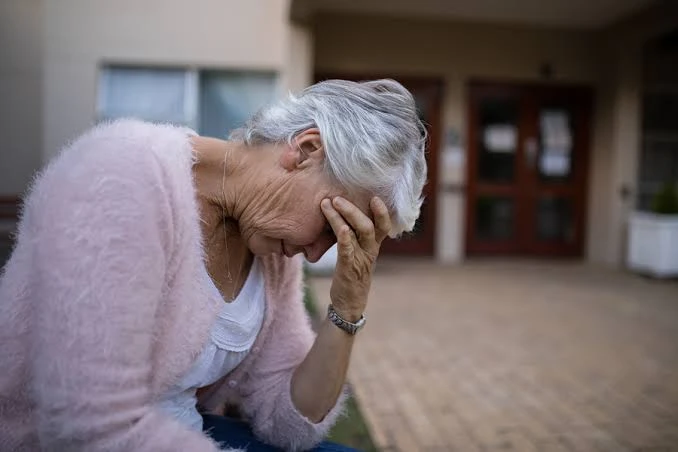
Quick Answer: How to Deal With Aging Anxiety
Aging anxiety becomes easier to manage when you stop treating the future as one huge unknown. Small routines, meaningful connections, and small actions that remind you of your ability can help you feel grounded again.
You do not need to eliminate every fear about getting older. The goal is to build a life that still feels meaningful, connected, and yours.
Why Is My Aging Anxiety Worse Even When Nothing Bad Is Happening?
You’d think that after decades of surviving hard things, the fear of what’s next would soften.
For me, it got sharper.
Part of it is that getting older piles up losses. Not just people, though that’s a huge one.
You lose the version of yourself who could trust your body, who felt useful, who had a clear role.
Friends move away or die. The world shifts and the language changes, and suddenly you feel like a stranger in your own timeline.
My father used to say, “I’m not afraid of dying, I’m afraid of being a burden.”
I never understood it until I caught myself saying the same thing to a friend last year.
That’s the root, I think.
Aging anxiety often isn’t only about death. It’s about the uncertainty in between.
The slow loss of independence. The fear that you’ll become someone people have to take care of. That your stories will bore people. That your body will change in ways you cannot predict.
And if you’ve lived with anxiety before, even decades ago, it can sometimes return in new forms.
Maybe you were a shy kid who grew into a competent adult. But now, in a world that often values speed and youth, that old self-consciousness shows up at the dinner table or the doctor’s office.
It’s not weakness.
It’s your brain trying to protect you from a future that feels uncertain.
What Can You Actually Do About Aging Anxiety When “Just Relax” Doesn’t Work?
I tried all the usual advice.
Breathe deep. Think positive. Count blessings.
It helped for about three minutes.
What eventually started to shift something was a very practical, almost boring idea: take one small action a day.
That’s it.
I borrowed this idea from someone online who said, “If you can push through discomfort in one area of life, you can practice doing the same in another.”
So I started with tiny steps.
I found a walking group at the park. I messaged an old colleague I hadn’t spoken to in years.
Some days the action was just going to the library and sitting in the reading room instead of staying home.
Every time, my brain screamed at me to cancel.
And every time, I went anyway.
It’s uncomfortable and scary at first.
But it does get easier, like any practice.
I learned to accept my awkwardness and sometimes even joke about it.
When I blanked on a woman’s name at that walking group, I just said, “I’m so sorry, my brain’s buffering today.”
She laughed. I laughed.
Nobody died.
Ownership changes things.
I also talked to my doctor.
This was huge.
I said, “I think I might be dealing with something more than normal worry.”
She didn’t dismiss it. She asked gentle questions and helped me look at whether anything else might be contributing to the physical symptoms, like the racing heart and the tight chest.
Anxiety can sometimes feel physical, and it is always worth discussing ongoing symptoms with a healthcare professional.
I learned that getting support does not mean something is wrong with you. Sometimes it simply means you do not have to carry everything alone.
The “One Anchor” Practice That Grounded Me
I didn’t invent this, but I gave it a name that made sense to me.
Every morning, I pick one anchor.
Something tiny and reliable that I know will happen, no matter what.
It might be my 9 a.m. cup of tea on the porch. A phone call with my sister on Thursdays. A five-minute stretch routine after lunch.
The anchor isn’t meant to fix the anxiety.
It’s a handhold when the wave of “what if” gets too big.
On really hard days, I write the anchor on a sticky note and put it on the bathroom mirror.
I tell myself, “This is enough. This one thing is real and it’s happening.”
I can’t explain exactly why it helps.
Maybe because aging anxiety makes the future feel like a dark tunnel with no railings.
An anchor is a railing.
It’s small, but it’s there.
When The Fear Hits At 2 a.m.
Nighttime is the worst.
The house is quiet and your brain decides to list every disaster that hasn’t happened yet.
I used to lie there spiraling.
Now I do one thing: I get up.
Not to scroll on my phone, but to physically move.
I walk to the kitchen, drink water, and sit in the dark living room until my heartbeat slows.
Then I ask myself, “Is there anything I can actually solve right now?”
The answer is almost always no.
Sometimes just naming that is enough to let me go back to bed.
What If I’m Afraid of Losing My Memory?
This fear sat in my stomach like a stone.
I’d forget a word or misplace keys and think, “This is it.”
What helped was learning that normal aging can come with changes in memory and processing speed, but not every forgotten word or misplaced item means something serious.
I started doing things that made me feel capable.
Puzzles, yes, but also teaching my granddaughter how to bake, which forced my brain to sequence steps and adapt.
Staying socially connected and mentally engaged gave me a stronger sense of confidence.
I don’t know exactly what the future holds, but I feel less helpless.
How to Talk to a Doctor About Aging Anxiety
It’s hard to admit you’re scared of something as abstract as getting older.
But doctors hear this.
I said, “I can’t stop worrying about becoming dependent, and it’s affecting my sleep and my mood.”
That was enough.
Write it down beforehand if you need to.
You deserve to be seen, not just for physical concerns, but for the emotional weight you’re carrying too.
When Should You Ask for Help?
If aging anxiety is affecting your sleep, relationships, daily activities, or causing you to avoid things you once enjoyed, it may be time to talk with a mental health professional or healthcare provider.
You do not need to wait until the fear feels impossible to manage.
If you ever feel unsafe, feel like you might hurt yourself, or are experiencing a mental health emergency, seek urgent local support immediately.
FAQ
Can aging anxiety cause physical symptoms like a racing heart?
Yes. When you’re dealing with aging anxiety, stress can show up physically. A racing heart, shallow breathing, muscle tension, and trouble sleeping can happen during periods of intense worry.
However, physical symptoms can have many causes, so it is always a good idea to discuss ongoing or concerning symptoms with a healthcare professional.
Is it normal to feel this way or do I have an anxiety disorder?
Feeling some worry about getting older is normal.
When that worry starts to take over your daily life, makes you avoid people, or keeps you from doing things you used to love, it may be a sign that you need extra support.
You don’t need to diagnose yourself. Start by noticing when fear begins shrinking your world.
How do I start using the “one action a day” idea if I feel too tired?
You don’t have to start with anything big.
One phone call. One walk to the mailbox. One message to someone you trust.
The goal isn’t to fix the anxiety that day.
It’s to give your brain a small piece of evidence that you can still show up for your own life.
What if I’ve been anxious my whole life and now it’s worse?
That’s not uncommon.
Some people notice old patterns of anxiety becoming stronger during major life transitions, including aging.
The good news is that support and treatment options are available at every stage of life.
You’re not too old to feel better.
I used to be pretty scared of getting old.
Not just a little.
Deep-down, bone-level scared.
I’m not super happy about every part of aging now, but something has shifted.
My life kept getting better in ways I didn’t expect, even as some things changed.
The world is still full of hopes and dreams.
They look different. Smaller, maybe.
But they’re still there.
And that’s what I wish for anyone waking up at night with a racing heart and a head full of dread:
The quiet knowledge that you don’t have to do this alone.