How to use this article:
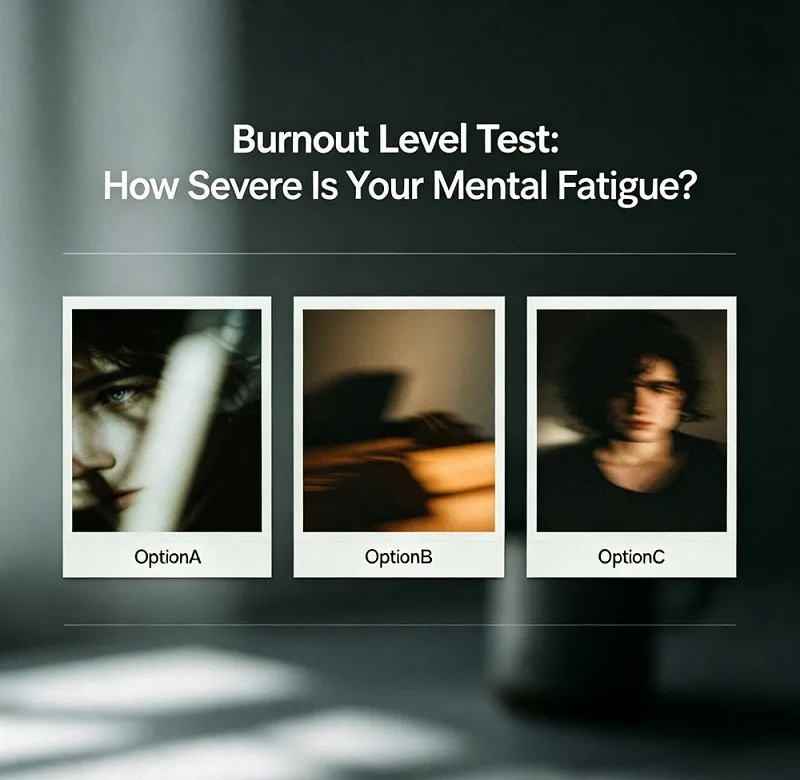
Look at the image above – each option (A, B, C) represents a different burnout pattern. Read all four personalized results below based on common combinations of your answers. Find the description that fits you best to understand your current mental fatigue level and get targeted advice.
Option A – Early warning signs
You feel mentally foggy after work but still recover overnight. Small tasks take longer than before, and you occasionally snap at colleagues. Your motivation isn’t gone, but your energy drains faster by midday. This is the ideal stage to act – tweak your sleep, set micro-breaks, and say no to extra shifts. Without changes, you may slide into moderate burnout within 2–3 months.
Option B – Moderate, persistent exhaustion
Most mornings you wake up unrefreshed, dreading your routine. You’ve lost interest in hobbies you once loved, and emotional numbness creeps in – you neither enjoy successes nor feel sad about failures. Physical symptoms like tension headaches or gut issues appear weekly. Recovery no longer happens overnight. Consider reducing work hours, starting therapy, or taking 1–2 weeks off.
Option C – Severe, systemic burnout
You feel detached from your entire identity – work, friendships, even your values. Simple decisions feel impossible, and you’ve had recurring thoughts about quitting everything or disappearing. Physical shutdown signs (chronic insomnia, panic attacks, frequent illness) are present. This is not a weakness – your nervous system is overwhelmed. Please speak to a doctor or mental health professional this week.