You are sitting at your desk. Nothing bad happened today. Your boss did not email you. Your bills are paid. Yet your chest feels tight. Your jaw is clenched. You keep checking your phone for no reason.
Why?
Anxiety often starts with uncertainty. When your brain feels like it does not have enough information, it starts making up stories. Usually unpleasant ones. Your partner might be in an accident. Your mind might go blank in the meeting. You might say something stupid at the party.
Your body does not know the difference between a real threat and an imagined one. When anxiety hits, cortisol and adrenaline flood your system. Your heart races. Your breathing gets shallow. You feel like something terrible is about to happen.
But here is the thing. Your body is trying to protect you. It just does not know when to stop. That is where these anxiety tips for adults can help. Not by stopping the feeling, but by giving you something to do with it.
Quick Answer: What do I do when anxiety hits?
You notice the physical signs early, name what you are feeling, and use one small grounding action to bring yourself back to the present.
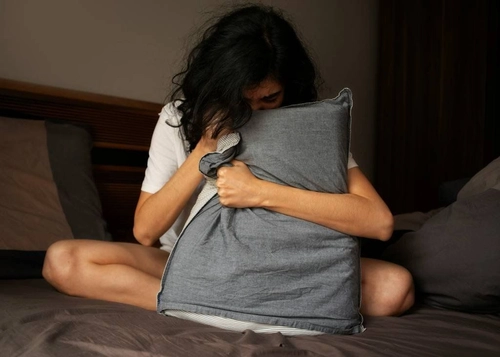
Start With Your Body, Not Your Thoughts
Anxiety does not just live in your head. It lives in your gut, your shoulders, your breath. Check your stomach. Does it feel cramped? Check your jaw. Is it tight? Check your breathing. Is it shallow or held?
For me, it is always my shoulders. They creep up toward my ears. Once I notice that, I can do something. Before I notice, I just feel irritable and do not know why.
Write down your own physical signs. Keep the list on your phone. When you feel off, look at it. It sounds too simple. It works anyway.
Know Your Triggers
Common triggers include meeting new people, performing at work, being alone, managing money, thinking about illness, confronting family, and trying new things.
Your list will look different. That is fine. The point is to know where anxiety tends to strike so you can prepare.
Move Your Body, Even for Two Minutes
Physical activity burns off tension. It releases chemicals that boost your mood. You do not need a full workout. A quick walk. Ten jumping jacks. Dancing in your kitchen.
I keep a jump rope in my closet. When I feel that familiar tightness, I do fifty skips. It sounds ridiculous. It works better than anything else I have tried.
The Five-Minute Grounding Ritual
This has pulled me back from the edge more times than I can count.
Minute one. Name five things you can see. Be specific. “A blue mug. A crack in the ceiling. My left shoe.”
Minute two. Name four things you can feel. “The chair under my legs. The fabric of my shirt. The cold floor.”
Minute three. Name three things you can hear. “A car passing. The hum of the fridge. My own breath.”
Minute four. Name two things you can smell. “Coffee. Laundry detergent.”
Minute five. Name one thing you can taste. “Mint from my tea.”
That is it. Five minutes. No app. Just your senses pulling you back into the room.
What If Anxiety Keeps You Up at Night?
Nighttime is hard. The house is quiet. Your brain fills the silence with worst-case scenarios.
One thing that helps is writing it down. Keep a notebook by your bed. When a worry shows up, write it down. Then close the notebook. You are not solving the problem at 2 AM. You are just telling your brain you heard it.
Another thing is getting out of bed. If you have been lying there for twenty minutes and sleep is not coming, get up. Sit in a chair. Read something boring. Go back when you feel sleepy. Lying there trying to force sleep makes it worse.
A Honest Word About Exercise
You have probably heard that exercise helps anxiety. That is true. But when you are anxious, the idea of exercising feels impossible. You are already exhausted.
So start smaller than you think you need to. One song. Dance to one song in your living room. Walk to the end of your street and back. That counts. The goal is not fitness. The goal is to remind your body that it can move through the feeling.
Watch What You Reach For
Be honest with yourself. When anxiety shows up, what do you reach for? A drink? Your phone? Online shopping? Another snack? I have done all of these.
The trick is to notice the pattern without shaming yourself. “Oh, there I go again. Reaching for my phone.” That is it. Just notice. The noticing creates a tiny gap. In that gap, you might choose something different.

FAQ
Is it normal to feel anxious for no reason?
Yes. Anxiety often comes from uncertainty, not from a clear threat. Your brain fills in the gaps with worst-case stories.
How do I stop an anxiety spiral quickly?
Use your senses. Name what you can see, feel, hear, smell, and taste. It pulls your attention out of the spiral and back into the room.
Can anxiety go away on its own?
Mild anxiety often fades when the trigger passes. But if it sticks around for weeks, it usually needs some active work to shift.
What if nothing on this list works?
Then talk to a professional. Therapy can help you understand your specific patterns and build tools that fit you. You do not have to figure this out alone.
One Last Thing
You are not broken because you feel anxious. You are human. Your brain is trying to keep you safe. It just gets confused sometimes.
The next time your chest tightens and your thoughts start spinning, try one thing from this list. Just one. The grounding ritual. A two-minute walk. Writing down the worry before bed.
You do not have to fix everything today. You just have to get through this moment. And you can.
References
- American Psychological Association. “Anxiety.” APA Dictionary of Psychology.
- Bourne, E. J. (2015). The Anxiety and Phobia Workbook. New Harbinger Publications.
- Harvard Health Publishing. “Exercise and stress: Get moving to manage stress.” Harvard Medical School.