I remember the morning my daughter refused to get out of the car. She was eight. She had a stomachache. She had a headache. She said her legs didn’t work. I knew what was really happening. She was terrified of school.
It wasn’t the work. It was everything else. The noise. The crowd in the hallway. The pressure to answer questions in class. The fear that her friends wouldn’t sit with her at lunch. She couldn’t name it all at once. She just knew she didn’t want to go.
That morning, I sat with her in the car for twenty minutes. I didn’t force her out. I just sat there and breathed. Eventually, she got out. She cried in the hallway. But she made it through the day.
If you’re searching for how to help a child with anxiety about school, you’ve probably had a morning like this. Let me walk you through what helped us.
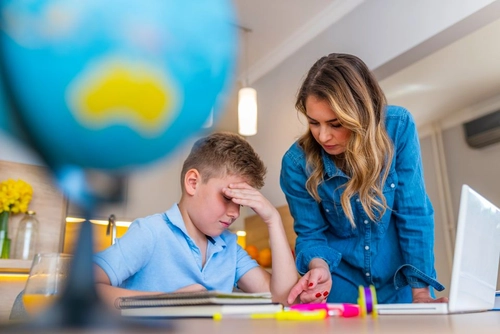
Quick Answer: How can I help my child with school anxiety?
You can help by creating a calm morning routine, talking to the school about support plans, giving your child a trusted adult to check in with, and reducing academic pressure where possible.
What School Anxiety Actually Looks Like
Anxiety at school doesn’t always look like crying. Sometimes it looks like refusal to get out of bed. Sometimes it’s headaches or stomachaches that appear right before school starts. Sometimes it’s a child who seems fine all day but falls apart the second they get home.
One expert explained it this way: holding it together at school takes so much energy that kids are exhausted by the time they get home. That exhaustion comes out as meltdowns, irritability, or complete withdrawal.
My daughter used to be fine at school. She’d smile, do her work, and talk to friends. Then she’d walk through the front door and burst into tears. I used to think she was holding it in all day just to let it out at home. That’s exactly what was happening.
Start With the School
You don’t have to handle this alone. Schools have systems in place to support anxious kids.
A 504 plan is one option. It provides accommodations like daily check-ins with a trusted adult, flexible attendance, or permission to take breaks. These plans are created by a team that includes parents, teachers, and counselors.
I once read a book called The Parent You Aspire to Be that talked about how small shifts in routine can change a child’s whole day. That idea stuck with me. I started asking for small accommodations, like having my daughter meet the counselor first thing in the morning. That five-minute check-in made a huge difference. She knew someone was watching out for her, and that gave her the courage to walk into her classroom.
An IEP, or Individualized Education Plan, is another option. It’s for kids whose anxiety significantly impacts their learning. An IEP can include reduced workload, extended test time, or a quiet space for tests. It might also include specialized instruction.
Methods That Helped Us
Daily Check-Ins
My daughter’s school agreed to have the counselor meet her at drop-off every morning. Just for five minutes. They’d talk about her morning, do a quick breathing exercise, and walk her to class. That small ritual eased the hardest part of her day.
Flexible Attendance
Some kids need a gradual return to school. Starting with half-days and slowly adding classes can reduce the fear of being overwhelmed. It’s not about avoiding school. It’s about building confidence over time.
A Safe Space
We worked with the school to give my daughter a quiet place to go when she felt overwhelmed. She could step out of class for five minutes, decompress, and come back. Knowing she had an escape plan made the rest of the day easier.
Reduced Workload
Homework was a major source of stress for my daughter. Her teacher agreed to reduce the number of problems she had to complete. Instead of twenty math problems, she only had to do ten. The goal was still to learn the concept. But the pressure was lower.
What to Say When They’re Struggling
If your child says “I can’t go to school,” don’t dismiss it. But also don’t give in completely.
A therapist once told me to validate the feeling, but hold the expectation. “I know you’re scared. School feels really hard right now. But we’re going to find a way to make it work.”
That balance is important. You’re not pretending the fear isn’t real. But you’re also not letting anxiety make the decisions.
When to Get More Help
If your child’s school anxiety lasts for weeks, includes panic attacks, or leads to refusal to leave the house, it’s time to get professional help.
Cognitive behavioral therapy is the most effective treatment for childhood anxiety. A therapist can teach your child coping strategies that actually work. They can also help you learn how to respond to their anxiety without making it worse.
Some kids also benefit from medication, especially if anxiety is interfering with daily functioning. That’s something to discuss with a psychiatrist.
One Last Thing
That morning in the car, I felt completely helpless. I didn’t know if I was doing the right thing. But I stayed with her. I didn’t rush her. I didn’t force her. I just sat with her until she was ready.
It took months of small adjustments, but my daughter eventually started looking forward to school. She still has hard days. But she knows she can handle them.
If you’re in that car right now, sitting with your child while they cry, I want you to know something. You’re not failing. You’re learning. And so are they.