Someone says they are fine, but something feels different. A friend pulls away but never explains why. You react in a way you do not fully understand yourself.
You leave conversations confused. You replay interactions, trying to decode what was really happening. You wonder why people behave the way they do, and sometimes, why you behave the way you do.
Understanding people is harder than it looks. Words are unreliable. Behavior is inconsistent. And people often do not understand themselves, let alone explain themselves to others.
The three books below form a sequence. Start with human nature. Move to relationships. End with self-awareness.
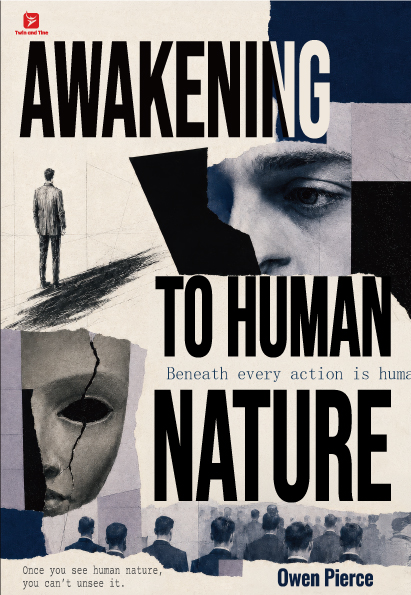
Awakening to Human Nature by Owen Pierce
Understand the hidden forces behind why people think and act the way they do
The biggest mistake people make when judging behavior is assuming that what they see on the surface is the whole story. They see a choice and assume it was made for clear reasons. They see a reaction and assume it was intentional.
Pierce argues that this view misses most of what is actually happening. Much of human behavior is shaped by things people are not fully aware of: self-protection, emotional reflexes, the desire to maintain a positive self-image, and the avoidance of discomfort.
In relationships, this shows up constantly. A partner who dismisses your feelings may not be cold. They may be protecting themselves from shame. A friend who avoids conflict may not be peaceful. They may be avoiding the anxiety of confrontation. A coworker who takes credit may not be greedy. They may be insecure about their own position.
This book gives you a foundation. Without it, the rest is guesswork. You learn to stop taking things personally because you see the deeper patterns. You learn to stop assuming people think like you do because you see the hidden logic behind their behavior.
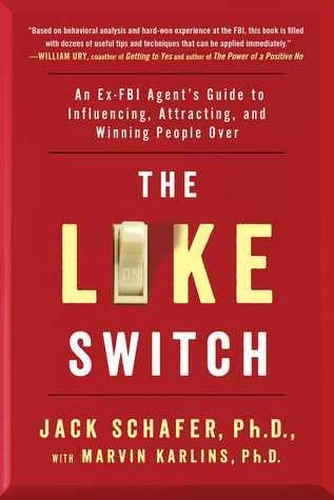
The Like Switch by Jack Schafer
Understand how people connect, communicate, and respond to each other
Human nature explains why people act the way they do. But understanding the bigger picture is only half the problem. You also need to understand how people interact in real time.
Have you ever wondered why some conversations feel natural while others feel forced? Why some people open up easily while others stay guarded no matter what you do?
Schafer, a former FBI behavior analyst, spent decades studying how people connect and build trust. His book explains the small behaviors that shape trust and connection: how people signal safety, how they respond to different communication styles, and why some interactions deepen relationships while others stay surface-level.
This book is not about manipulation. It is about recognizing the mechanics of human interaction. Understanding these mechanics helps you navigate relationships without second-guessing every exchange.
Insight by Tasha Eurich
Understand yourself and your blind spots
You may understand other people well. You may even understand human nature better than most. But if you cannot see yourself clearly, you will keep repeating the same patterns.
Eurich, a psychologist and executive coach, spent years studying self-awareness. She found that many people overestimate how well they understand themselves. Thinking about yourself is not the same as seeing yourself clearly. Self-reflection often reinforces blind spots instead of revealing them.
Her book challenges the idea that introspection alone leads to understanding. True self-awareness comes from seeing your own patterns, understanding how others experience you, and noticing the gap between your intentions and your actual impact.
This is the final piece. Understanding others is valuable. Understanding yourself is what stops you from repeating the same mistakes in every relationship.

What these three books teach you together
Understanding yourself and others is not one skill. It is three.
First, understand human nature. You learn the hidden forces that drive behavior. You stop being surprised by what people do.
Second, understand relationships. You learn how people connect, trust, and communicate. You stop being confused by everyday interactions.
Third, understand yourself. You learn to see your own patterns, your blind spots, and the gap between who you think you are and who you actually are. You stop repeating the same mistakes.
The goal is not to become someone who analyzes every person around you. It is to stop guessing, stop projecting, and start understanding.
FAQ
Why is it so hard to understand other people?
Because people rarely say what they actually mean. They often do not even know what they mean. Most behavior is driven by hidden forces that people are not fully aware of.
How do I know if I am actually self-aware?
Ask yourself: am I open to feedback that challenges my self-image? Self-awareness is not about knowing your strengths. It is about seeing your blind spots.
Is understanding people a skill you can learn?
Yes. It is not about having a natural gift. It is about paying attention to the right signals, understanding hidden forces, and practicing observation over time.
What is the most common mistake people make when trying to understand others?
Projecting their own thoughts onto others. People assume others think and feel the same way they do. Recognizing that people are wired differently is one of the most important steps.