You have been in this situation. Someone says they are fine. Their words are reassuring. But their arms are crossed, their jaw is tight, and their eyes keep drifting to the door. Something does not add up.
That gap between words and body is where the truth lives. Most of us sense it. Few of us can name it.
These three books help you close that gap.
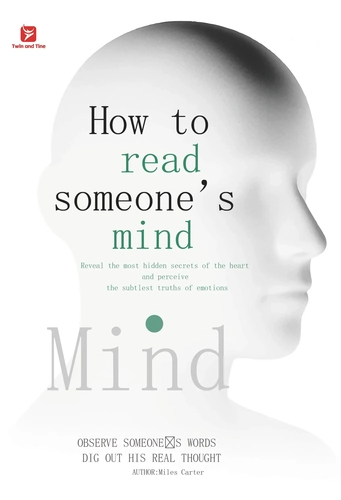
How to Read Someone’s Mind by Miles Carter
The problem with most body language books is that they treat gestures like a dictionary. This book treats them like a conversation.
Crossed arms. Averted eyes. A forced smile. Most books on body language give you a list: X means Y. But here is the problem: a crossed arm might mean defensiveness—or it might mean the person is cold. Averted eyes might mean dishonesty—or they might mean shyness.
Carter solves this problem by teaching you to read body language in context. He combines four channels—face, body, voice, and situation—so you can distinguish between a signal and a coincidence.
What you learn:
- Face: Micro-expressions that flash in a fraction of a second. A quick grimace. A forced smile. A tightened jaw. Most people miss these. Carter teaches you to catch them.
- Body: Posture, gestures, and movement. The lean-forward that signals engagement. The feet that point toward the door when someone wants to leave. The subtle shift that tells you they are about to say no.
- Voice: Tone, pitch, and pace. Excitement raises pitch. Disinterest flattens it. Pauses reveal hesitation. The voice is often the most honest channel because it is the hardest to control.
- Context: The situation shapes everything. A gesture means something different at work than at a party. Carter teaches you to read the room, not just the person.
One signal is a guess. Two signals are a clue. Three signals are a pattern. Carter gives you the framework to move from guessing to knowing.
For anyone tired of walking away from conversations unsure of what really happened.
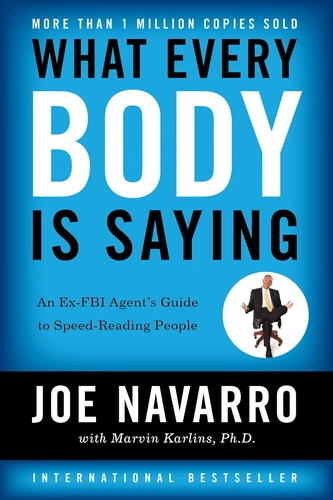
What Every Body Is Saying by Joe Navarro
The body never lies.
Navarro spent 25 years as an FBI counterintelligence officer. His job was to read people under pressure—criminals, spies, witnesses. He learned to spot the tiny, involuntary signals people send when they are nervous, hiding something, or trying to deceive.
This book is his field guide. He covers the feet (the most honest part of the body), the hands (which reveal comfort and discomfort), and the torso (which signals agreement or withdrawal). He also explains pacifying behaviors—touching the neck, rubbing the hands, stroking the face—that indicate stress.
What makes Navarro’s book essential is his focus on baseline behavior. You cannot read someone accurately unless you know how they act when they are comfortable. Once you have that baseline, deviations become obvious.
For anyone who wants to read people at a professional level—and protect themselves from deception.
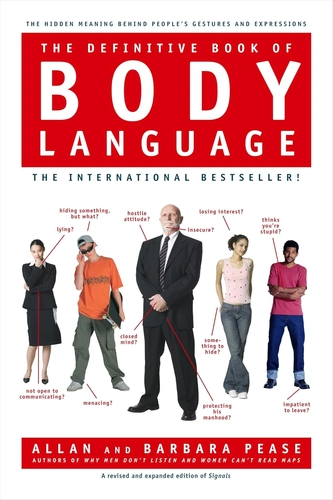
The Definitive Book of Body Language by Allan and Barbara Pease
A practical encyclopedia of nonverbal signals.
The Peases have written one of the most comprehensive guides to body language available. It covers everything from handshakes to eye movements to personal space. Each gesture is explained with photos, examples, and cultural variations.
What makes this book valuable is its sheer breadth. If you want to know what a specific gesture means—crossed ankles, hand-on-face, thumb-display—you can find it here. It is organized so you can use it as a reference or read it cover to cover.
The tone is accessible and entertaining. The Peases draw from real-world examples—courtship, negotiations, business meetings—and show you exactly what to look for.
For anyone who wants a comprehensive, easy-to-use reference for common body language signals.
Which book should you start with?
If you want a complete, practical framework for reading people—not just gestures, but the full picture—start with Carter. He gives you the system.
If you want to master body language at a professional level, read Navarro. He gives you the tactical edge.
If you want an encyclopedia you can reference anytime, read Pease and Pease. It is the most comprehensive resource.