Some people just seem to know what others are thinking. They walk into a room and read the mood instantly. They pick up on hesitation, hidden tension, unspoken discomfort.
It is not magic. It is observation. And observation can be learned.
The three books below each approach this differently. One teaches you to read the signals people send. One helps you understand why your brain misreads others. One explains how context shapes behavior.
How to Read Someone’s Mind by Miles Carter
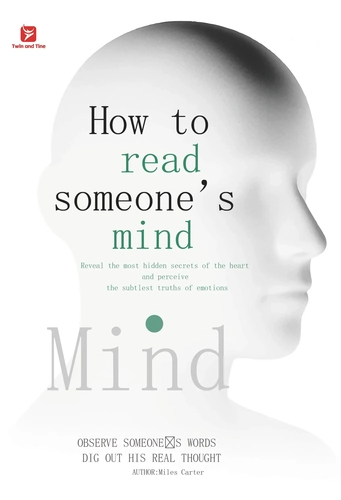
The signals people send without realizing it.
This book does not teach you to read minds. It teaches you to read behavior.
Most people miss the signs because they focus on words. But words are often the least reliable signal. People say what they think you want to hear. They are not always lying. They are managing impressions.
Carter breaks reading people into four dimensions: the face, the body, the voice, and the context. A forced smile. A shift in posture. A hesitation before answering. A tone that changes when a topic comes up. These are not random. They are signals.
The book gives you a framework for noticing what people reveal through patterns over time. One short reply does not mean much. A consistent pattern of avoidance or defensiveness tells you something real. You learn to stop overanalyzing every interaction and start seeing what actually matters.
For anyone who keeps missing what is right in front of them.
Mindwise by Nicholas Epley
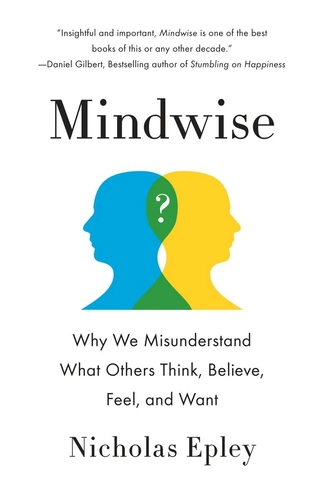
Why are you so often wrong about what others are thinking?
Epley, a University of Chicago psychologist, spent years studying how people understand each other. His conclusion is uncomfortable: even the people closest to us, we are often wrong about what they are thinking and feeling.
We are all mind readers. We do it dozens of times a day. We infer what others are thinking, wanting, intending. But we are not nearly as good at it as we think.
The book identifies the common mistakes. Projection: assuming others think the way you do. Stereotyping: relying on categories instead of paying attention to the actual person in front of you. Anchoring: treating your first impression as the truth and filtering everything through it.
What makes this book valuable is the shift in perspective. It does not just tell you that you are bad at reading people. It explains why you are bad at it—and how your brain gets in the way.
For anyone who has ever been completely wrong about someone.
The Social Animal by Elliot Aronson

Why do people behave differently in groups than they do alone?
You can read individuals well. You understand their patterns. But when you put them in a group, something changes. People act differently. They say things they would not say alone. They agree with things they do not believe.
Aronson, one of the most respected social psychologists in the field, wrote this book to explain why. He covers conformity, social pressure, first impressions, attraction, and the hidden forces that shape human behavior.
What makes this book essential is the focus on context. Reading people is not just about individuals. It is about understanding how situations shape behavior. Someone who seems confident in one setting may become deferential in another. Someone who is kind with friends may be competitive at work.
For anyone who understands individuals but still feels confused by group dynamics.
These three books each approach reading people from a different angle. Carter teaches you to see the signals people send. Epley explains why you often misread them. Aronson shows you how context changes behavior.
If you want to stop being surprised by people, start with the one that matches where you are stuck. Need to notice what you are missing? Start with Carter. Need to understand why you keep misreading? Start with Epley. Need to understand why people change in groups? Start with Aronson.
You do not have to guess what people are thinking. You just have to learn to see what they are already showing you.