You have probably done this. Someone gave you a reason to doubt them, but you ignored it. You told yourself you were being unfair. You gave them another chance. You wanted to believe the best.
Later, you found out you were right to be uneasy. And you wondered why you did not trust yourself sooner.
The problem is not that you are naive. The problem is that you have been taught to override your own perception. You have been told that being suspicious is cynical, that giving people chances is what good people do.
But trust is not a moral virtue. It is an assessment. And assessments require accurate information.
The books below help you understand why people behave the way they do, why deception can feel so convincing, and how to trust your own judgment without becoming cynical.
Awakening to Human Nature by Owen Pierce
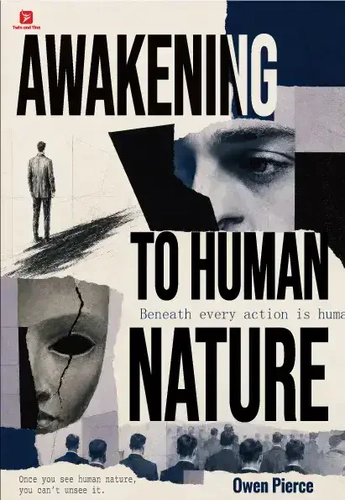
Understand why you trust people too easily
Most people assume that when someone lies or manipulates, they are deliberately malicious. But that is often not the case. People deceive for many reasons: to protect themselves, to avoid shame, to maintain control, to preserve an image they have built.
Pierce’s book is about the hidden forces that drive human behavior beneath awareness. People do not always act according to their stated values. They act according to what protects their ego, what avoids discomfort, what serves their interests in the moment. This is not always conscious. It is often automatic.
When you understand this, you stop asking “are they a bad person?” and start asking “what is driving this behavior?” That shift changes everything. It does not make you cynical. It makes you accurate.
What you will learn:
- Why people behave differently from what they say
- How self-protection shapes behavior
- Why trusting too easily is not a character flaw
- How to distinguish between generosity and blindness
Who should read this: Anyone who has ever wondered why they keep giving people the benefit of the doubt.
The Gift of Fear by Gavin de Becker
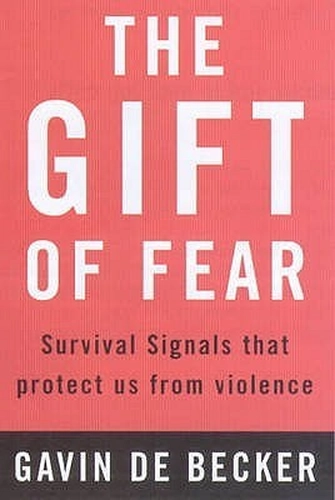
Learn to trust the signals you keep dismissing
You know that feeling. The one that tells you something is not right, even when you cannot explain why. De Becker spent decades in security and threat assessment, and his core argument is simple: that feeling is information.
He writes about people who ignored their instincts and later regretted it. Not because they were stupid, but because they were taught to be polite, to dismiss their unease, to give people the benefit of the doubt even when something felt wrong.
This book is not about living in fear. It is about learning to trust the signals your brain is already picking up. De Becker shows you how to distinguish between fear that protects you and fear that holds you back. And he explains why the people who are most likely to manipulate you will often seem the most charming.
What you will learn:
- How to recognize the signals your brain is already sending
- Why people ignore their instincts
- The difference between useful fear and fear that holds you back
- Why manipulative people often seem the most trustworthy
Who should read this: Anyone who has ever ignored a gut feeling and later regretted it.
The Confidence Game by Maria Konnikova
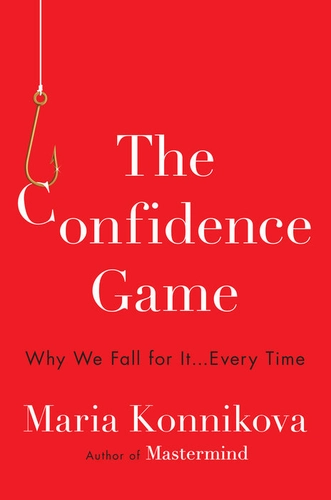
Understand why deception feels so convincing
Why do smart people fall for scams? Not because they are gullible. Because con artists are good at what they do.
Konnikova, a psychologist and writer, studied the mechanics of deception. She found that successful manipulation follows a predictable pattern: a story that feels right, a display of confidence, a promise of something desirable, and a gradual escalation that makes it harder to walk away.
The book is not about street-level fraud. It is about why people believe what they want to believe, even when the evidence does not support it. It explains why a convincing story can override logic, why consistency feels like trustworthiness, and why the most effective deceivers are often the ones who seem the most genuine.
What you will learn:
- Why intelligent people fall for deception
- How charm and confidence create trust
- Why people believe what they want to believe
- How to recognize the patterns of manipulation
Who should read this: Anyone who has ever been fooled by someone who seemed completely trustworthy.
A different way to think about trust
Most people treat trust as a binary choice: you trust someone or you do not. But trust is not binary. It is a spectrum.
You can trust someone in one area and not in another. You can trust their intentions but question their reliability. You can give someone a chance while also paying attention to what they actually do.
The real problem is not trusting too easily. It is trusting without information. It is overriding your own perception because you want to believe. It is confusing hope with evidence.
These books are not about becoming suspicious of everyone. They are about becoming more accurate in your assessments. You stop treating trust as a gift you give to others and start treating it as a conclusion you reach based on what you observe.
FAQ
Why do I trust people too easily?
Because you were taught that being suspicious is wrong. You learned to give people the benefit of the doubt. The instinct to trust is not a flaw. The problem is trusting without information.
How do I stop being too trusting?
Start by paying attention to your own instincts. Notice when something feels off. Give yourself permission to pause instead of automatically trusting.
Is it bad to be trusting?
No. Trust is essential for relationships. The problem is not trust itself. It is trusting people who have not earned it.
How do I know if someone is trustworthy?
Look for consistency over time. A single good impression is not enough. Watch how they treat people who cannot help them. Pay attention to what they do, not just what they say.