Have you ever talked to someone who said everything was fine, but something about the conversation felt different?
Maybe their words sounded normal, but their tone changed. Maybe their expression did not match what they were saying. Or maybe you simply felt that something was happening beneath the surface.
When people try to understand others better, they often discover two different approaches. Some turn to body language books that teach them how to recognize physical signals. Others choose psychology books that focus on emotions, motivations, and behavioral patterns.
Both approaches can help you understand people. However, they answer different questions.
Body language helps you notice what is happening on the outside. Psychology helps you understand what may be happening underneath.
In this guide, we compare psychology books vs body language books and explore which approach is more useful depending on your goals.

Quick Answer: Psychology Books vs Body Language Books
- Choose psychology books if you want to understand emotions, motivations, and long-term behavior patterns.
- Choose body language books if you want to improve your ability to notice physical signals and nonverbal communication.
- Best overall approach: Learn psychology first, then use body language knowledge to improve your observation skills.
How to Read Someone’s Mind by Miles Carter: The Psychology Approach
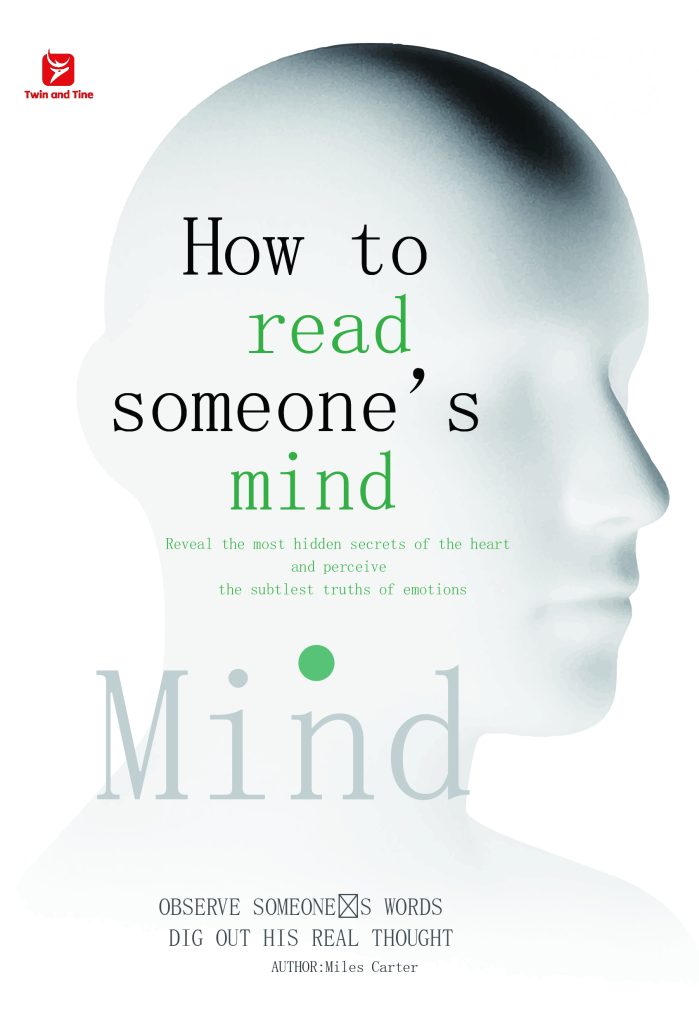
How to Read Someone’s Mind by Miles Carter takes the psychology approach to understanding people.
The main idea behind the book is simple: reading people is not about memorizing hundreds of gestures. It is about understanding the complete picture.
People’s emotions and behaviors are influenced by many factors, including their personality, past experiences, current situation, and relationship with you.
Carter introduces a four-layer framework:
- Face
- Body
- Voice
- Context
Instead of focusing on one isolated signal, this framework teaches readers to combine different forms of information.
For example, someone becoming quieter in a conversation does not automatically mean they are upset. The important question is whether this behavior is different from their usual communication style and what other factors may explain the change.
This psychology-based approach is useful because it focuses on understanding people as individuals rather than treating every behavior as a fixed sign.
Why It Works:
- Focuses on real-life conversations and relationships
- Combines emotions, behavior, and context
- Helps you understand patterns instead of isolated signals
- Builds stronger social awareness over time
The Definitive Book of Body Language by Allan and Barbara Pease: The Body Language Approach
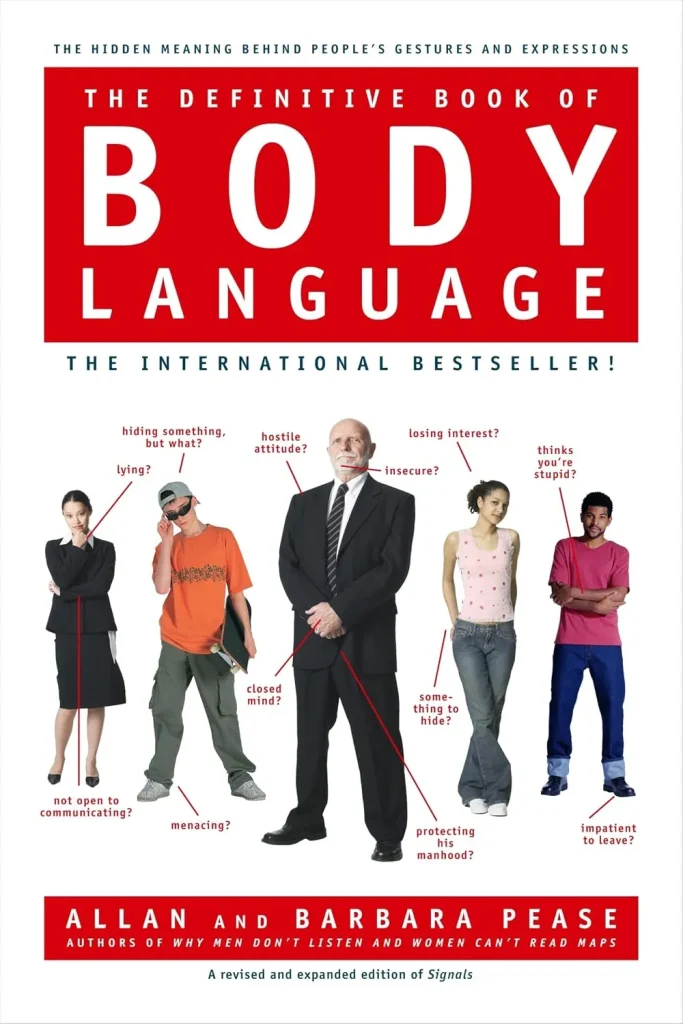
While psychology books focus on the reasons behind behavior, body language books focus on visible signals.
The Definitive Book of Body Language by Allan and Barbara Pease is one of the most popular books on nonverbal communication. It explores how gestures, posture, facial expressions, and physical habits influence the way people communicate.
The book explains how people often communicate without words. A person’s posture, eye contact, hand movements, and facial expressions can provide additional information during conversations.
For example, someone avoiding eye contact may be uncomfortable, distracted, or simply thinking carefully. Body language provides clues, but those clues still need to be interpreted within the right situation.
This is where body language knowledge becomes useful. It helps you become more observant and notice details that you may have ignored before.
Why It Works:
- Improves awareness of nonverbal communication
- Helps you notice physical signals during conversations
- Provides practical examples of gestures and expressions
- Makes everyday interactions easier to observe
The Same Conversation, Two Different Approaches
Imagine you are talking with a coworker about a new project. They say they support your idea, but something feels uncertain.
A body language approach would focus on visible signals:
- Did their facial expression change?
- Was their posture different?
- Did their tone of voice shift?
These details may provide useful information about their reaction.
A psychology approach would look at the bigger picture:
- How does this person usually communicate?
- Is this behavior different from normal?
- What concerns or emotions might influence their response?
- What is the situation around this conversation?
The difference is that body language helps you collect signals, while psychology helps you understand what those signals may mean.
Where Body Language Books Excel
Body language books are especially useful when you want to become more aware of nonverbal communication.
They teach you to notice details that are easy to miss, such as changes in posture, facial expressions, and movement patterns.
This can be helpful in situations like:
- Work meetings
- Presentations
- First conversations
- Social interactions
The limitation is that body language alone does not always reveal the full story. The same gesture can mean different things depending on personality and circumstances.
Where Psychology Books Excel
Psychology books are most useful when you want to understand deeper patterns.
They help you explore questions like:
- Why does someone react this way repeatedly?
- What emotions influence their decisions?
- Why do certain relationship patterns keep happening?
The advantage of psychology is that it considers the whole person. It does not only ask what someone is doing, but also why they may be doing it.
The limitation is that psychological understanding requires practice. You cannot learn it from a simple list of rules. It develops through observation and experience.
Which Approach Should You Choose?
The answer depends on what you want to improve.
If you want to become better at noticing nonverbal signals, body language books are a helpful starting point.
If you want to understand relationships, emotions, and repeated behavior patterns, psychology books provide a deeper foundation.
For most people, the best approach is combining both.
Start with psychology to understand the bigger picture. Then use body language knowledge to improve your ability to observe the details.
Body language gives you clues. Psychology helps you understand those clues.
Frequently Asked Questions
Are psychology books better than body language books?
Neither is universally better. Psychology books provide deeper understanding of emotions and behavior, while body language books focus more on visible communication signals.
Can body language really help you understand people?
Yes, body language can provide useful information. However, it works best when combined with context and an understanding of the person’s normal behavior.
What should I read first: psychology books or body language books?
For most readers, starting with psychology is helpful because it teaches you how to understand behavior before interpreting individual signals.
What is the best book for learning to read people?
How to Read Someone’s Mind by Miles Carter is a practical starting point because it combines emotional awareness, observation skills, and context-based understanding.
Final Thoughts: Understanding People Requires More Than One Skill
Understanding people is not about finding a secret formula or decoding every small action.
Real social intelligence comes from combining observation with empathy. Body language helps you notice what people show. Psychology helps you understand the emotions and experiences behind those signals.
When you develop both skills, conversations become clearer, relationships become healthier, and you become more confident in understanding the people around you.