Some nights I lie awake staring at my phone, waiting for the little “read” notification to appear. He is 20 minutes late replying. My chest tightens. My mind already has him in a car wreck on the highway. I know this is not rational. I know he is fine. But my body does not believe what my brain knows. Adult separation anxiety feels exactly like this. A terror so physical, so immediate, that logic becomes a language you no longer speak.
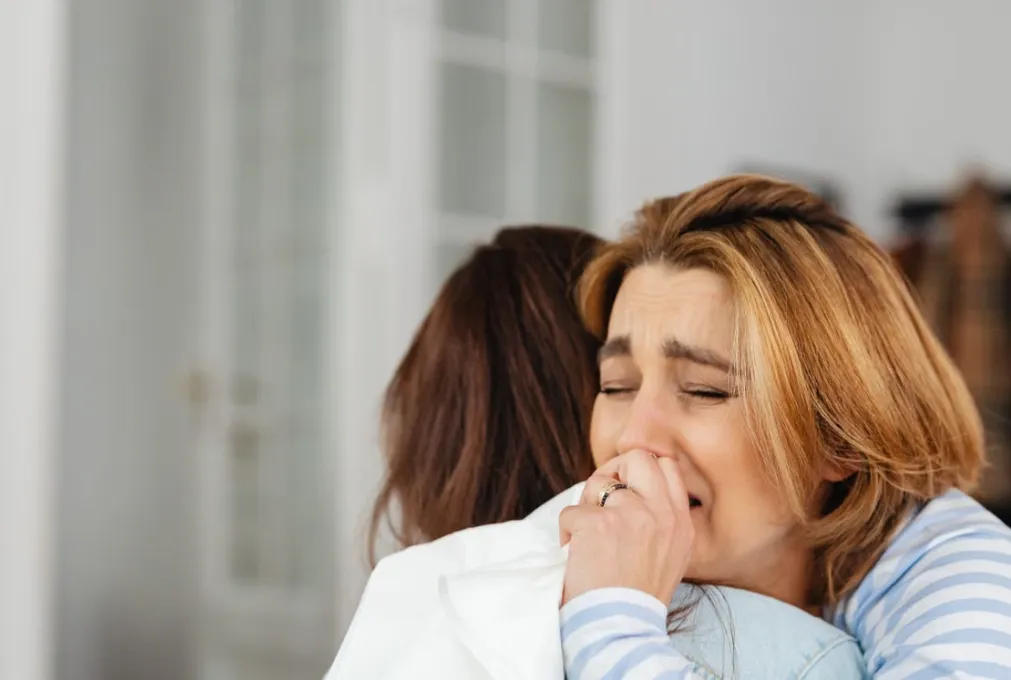
Why Does Leaving Someone Feel Impossible?
The fear does not start the moment they walk out the door. It starts hours before. A slow tightening. A background hum that grows louder. When my partner packed for his first business trip after we moved in together, I found myself snapping at him over nothing. I did not understand then that I was already grieving a loss that had not happened.
Adult separation anxiety is not about being clingy or dramatic. It is a nervous system response that has learned, somewhere deep in your history, that separation equals danger. Maybe you lost someone suddenly as a child. Maybe caregiving was inconsistent. A parent who was there one day and gone the next. Or maybe you experienced a traumatic loss in adulthood. A divorce you did not see coming. A death that shattered your sense of safety.
Your body may carry the impact of those experiences. The racing heart when a loved one is late. The nausea when you see their suitcase. The inability to sleep in an empty house. These are not personality flaws. They are survival strategies your nervous system developed to protect you from a threat that once felt real.
I remember sitting in my therapist’s office, embarrassed to admit I could not sleep when my partner worked late. I would lie on the couch, wrapped in his blanket, tracking his location on my phone. She asked gently, “When did you first learn that being alone was unsafe?”
The question stopped me. I had never connected the dots between my childhood self, left waiting at school long after everyone else had gone home, and this adult woman who could not rest until she heard the key in the lock.
How Do I Stop Adult Separation Anxiety From Controlling My Life?
The path back to independence is not about forcing yourself to be fine with separation. That approach backfires. It is about teaching your nervous system, slowly and repeatedly, that separation is survivable.
Learning how to manage adult separation anxiety starts with understanding that the goal is not to eliminate attachment, but to build a stronger sense of safety within yourself.
I started with something small. Five minutes of intentional alone time. Not the kind where I was distracted by TV or work. Actual alone time where I sat with the discomfort and noticed what happened in my body. The first time, I lasted three minutes before texting him. The fifth time, I made it the full five. It was not pleasant. But it was bearable.
This is the core of what helped me. Recognizing that the anxiety itself, while horrible, would not actually destroy me. It would peak, and then it would pass. Each time I survived a separation, my body learned something new. Safety is possible even when they are not here.
A moment that shifted something in me happened during a weekend my partner was away. I woke up at 3am with the familiar panic. Instead of grabbing my phone, I put my hand on my chest and said out loud, “You are scared. That makes sense. And you are also safe right now.”
I did not try to make the fear go away. I just sat with it. After a while, my breathing slowed. I fell back asleep without calling him. That morning felt like a small triumph.
Friends and family can help, but they need to understand what helps and what does not. Constant reassurance, like responding to every anxious text immediately, can sometimes strengthen the anxiety cycle. What helped me more was having people who believed I could handle being alone, even when I did not believe it myself.
The Anchor Practice: Building Inner Safety Before Separation
I created something I call the Anchor Practice for the moments before separation. It takes about ten minutes and works best when done together before a departure.
First, we sit facing each other. No phones. No distractions. We each name one thing we are looking forward to during the time apart. This shifts the focus from loss to possibility. He might say he is excited to try a new restaurant near his hotel. I might say I am looking forward to watching a movie he would not enjoy.
Second, we each say one thing we will miss about the other person. This honors the sadness without letting it dominate.
“I will miss the way you make coffee in the morning,” I might say.
“I will miss hearing you laugh at your own bad jokes,” he might reply.
Third, we make a small plan for reconnection. Not an anxious, constant-contact plan. A simple, intentional one.
“I will call you at 7pm on Tuesday,” or “Let us have breakfast together when I get back Saturday morning.” This creates a bridge between now and then. A visible thread connecting the separation to the reunion.
The final step is the one that felt strangest to me at first. We each put a hand over our own heart and take three slow breaths. The message is subtle but powerful. I can hold myself through this.
When Old Losses Affect New Relationships
Not all separation anxiety has a clear trigger. Sometimes it lives in the background of your life, a low-grade hum that you have learned to work around. But when love deepens, when someone becomes truly important, the volume turns up.
I have a friend who never worried about separations until her daughter was born. Suddenly, leaving the baby with a sitter felt physically impossible. She would sit in the parking lot outside the daycare, unable to drive away.
It took her months to realize this was not only about her daughter’s safety. Her daughter was fine. This was also connected to her own history. The foster placements that shifted unpredictably when she was small. The attachment figures who came and went.
Understanding the origin does not instantly remove the anxiety. But it can reduce the shame. You are not broken. Your body is responding based on what it learned from past experiences. Now you get to teach it something gentler.
What Adult Separation Anxiety Feels Like in the Body
The physical symptoms surprised me most. I expected the sadness. I did not expect the headaches that started an hour before every departure. The way my stomach would clench when I saw the calendar reminder for a business trip. The heart palpitations that appeared when I imagined being alone overnight.
Some people feel nauseous. Others struggle to eat. Some experience insomnia so severe that nighttime itself becomes something to fear. These symptoms are real. They are not attention-seeking. They are signs that your body’s alarm system is reacting strongly to perceived separation.
Once I started tracking my own patterns, I noticed the symptoms followed a predictable arc. They began with the anticipation of separation. Peaked during the first few hours alone. Then gradually subsided, often replaced by a strange flatness. A numbness that was almost as unsettling as the panic.
My therapist explained that this was my nervous system recovering after a period of intense stress. My body was learning that the danger it expected had not actually arrived.
How to Support Someone With Adult Separation Anxiety Without Losing Yourself
If you love someone with separation anxiety, you know the exhaustion of constant reassurance. The texts. The calls. The guilt when you need space. You may feel overwhelmed. You may also feel guilty for feeling overwhelmed, knowing their fear is genuine.
The hardest lesson I had to learn was that no amount of reassurance would ever be enough. The anxiety does not live in the distance between us. It lives inside me. He could text every five minutes, and the fear would still find a crack to return through.
What helped was not his constant availability. It was his steady, calm belief that I could handle being alone. He stopped rushing to fix my anxiety and started trusting my ability to move through it.
This is a difficult balance. To be present without rescuing. To offer connection without becoming the only source of safety. But when it works, something shifts. The anxious person begins to internalize that trust. They start to believe they are capable, not because someone repeatedly reassures them, but because they have experienced themselves getting through the fear.
When Should You Seek Extra Support?
Sometimes adult separation anxiety becomes more than a difficult feeling. If fear of separation affects your sleep, work, relationships, or daily choices, it may be worth talking with a mental health professional.
Getting support does not mean your attachment is unhealthy or that something is wrong with you. It simply means you are learning new ways to feel safe. Therapy can help you understand where the fear comes from, build emotional regulation skills, and practice separation in a way that feels manageable.
Frequently Asked Questions About Adult Separation Anxiety
Is adult separation anxiety a real condition?
Yes. Adult separation anxiety is recognized as a mental health condition that can affect people beyond childhood. It involves intense fear or distress around being separated from important attachment figures, especially when it begins interfering with daily life.
Can separation anxiety damage adult relationships?
It can create challenges when the need for constant reassurance becomes overwhelming for either partner. However, many couples improve their relationships when they learn to communicate openly, create healthy boundaries, and build security together.
Does adult separation anxiety get better on its own?
Some people notice their symptoms improve during stable periods of life. However, patterns of fear often become easier to manage when you actively practice building independence and emotional safety. Small, consistent steps are usually more helpful than waiting for the anxiety to disappear completely.
What is the difference between missing someone and adult separation anxiety?
Missing someone is a normal feeling of longing that exists alongside your ability to live your life. Adult separation anxiety feels much more intense. It may cause constant checking, overwhelming fear, difficulty being alone, or avoidance of normal activities because of the possibility of separation.
The first time I watched my partner leave for a trip and felt only the ordinary sadness of goodbye, without the terror underneath, I almost did not recognize myself.
The fear was not gone. It was simply quieter. A voice I had learned to hear without obeying.
I went inside, made tea, and sat in the silence.
The silence did not feel like abandonment anymore.
It felt like space.
Room to breathe.