The clock says 2:14am. You have to be up in four hours. And your brain, which behaved reasonably all day, has decided now is the perfect time to replay every awkward conversation from the past decade. If you are searching for how to stop anxiety at night, you already know this scene too well.
I spent most of my twenties believing I was simply a bad sleeper. Turns out I was a perfectly normal sleeper with an overactive night mind. The two are very different problems.
Quick Answer: How do I stop anxiety at night?
You stop night anxiety by interrupting the loop, not by winning the argument. Write the worry down, tell your brain you will handle it tomorrow, and give your body something else to do.
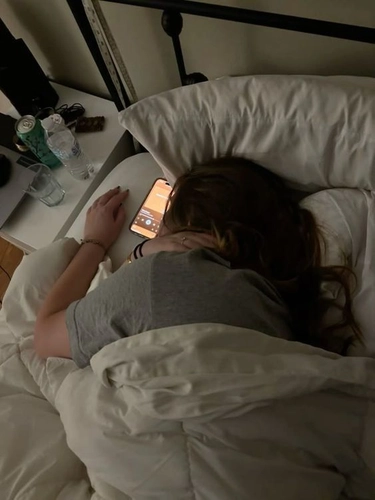
Why Does Anxiety Get Worse at Night?
Here is what nobody tells you. During the day, your mind has distractions. Emails, errands, conversations, the general noise of being alive. At night, all of that goes quiet. And whatever you have been outrunning all day finally catches up.
There is also something almost cruel about the timing. You are lying still in the dark, which is exactly when your body should be winding down. Instead your heart rate climbs. Small worries feel enormous. A minor email you sent at 4pm becomes evidence that you are about to be fired.
I remember lying awake one Tuesday, convinced a friend’s short text reply meant our friendship was over. At 9am the next morning, she sent me a photo of her cat. That is the night mind for you. It has terrible judgment and unlimited energy.
Many people also carry a second layer of anxiety about the anxiety itself. If I do not sleep now, tomorrow will be ruined. That thought alone can keep you up for another hour.
How to Stop Anxiety at Night: What Actually Helps?
The biggest shift for me was accepting a simple truth. You cannot argue your way out of a 2am spiral. Logic is not available at that hour. So the goal is not to win the argument. The goal is to interrupt the loop and give your body something else to do.
Here is a script I started using. It sounds almost too simple, but stay with me.
“Okay, brain. I hear you. We are not solving this tonight. We will look at it tomorrow at 10am with coffee.”
Then, and this part matters, I actually write the worry down on a notepad by my bed. One line. No detail. Just enough to tell my mind it has been recorded and does not need to keep shouting.
The first few nights, it felt ridiculous. By the second week, my mind started trusting the system. It learned that worries written down at night got handled in the morning. Most of them, by daylight, turned out to be nothing.
Other things that helped, in no particular order.
Getting out of bed if I was still awake after 20 minutes. Lying there fuming just taught my brain that bed equals frustration.
Keeping the room genuinely dark and slightly cool. Obvious, yes. Still underrated.
No phone after 10pm. This one was brutal. Also the single most effective change I made.
A boring podcast at low volume. Something about having a calm voice in the room quiets the internal one.
None of this is magic. It is closer to retraining a stubborn habit.
The Two-List Ritual
This is the tool that finally turned things around for me, and I have since passed it to at least five friends. I call it the Two-List Ritual. It takes ten minutes and you do it before bed, not during the night.
Grab a piece of paper. Draw a line down the middle.
On the left, write Tonight’s Problems. List everything circling in your head. The unpaid bill. The thing you said to your boss. The weird ache in your knee. Anything.
On the right, write Tomorrow’s Actions. For each problem, write one concrete next step. Call the bank. Apologize to your boss. Book a doctor’s visit.
Some items will not have an action. If it is something you cannot control, write nothing to do next to it. That is allowed. That is the whole point.
Then close the notebook and put it somewhere out of reach, ideally in another room.
The first time I did this, my left column had eleven items. My right column had four real actions. The other seven were things I had zero control over. Seeing that on paper was oddly freeing.
Why Does the Night Mind Refuse to Quiet?
Something I have noticed in myself, and in friends who struggle with this. We treat nighttime wakefulness as a personal failure. As if everyone else falls asleep like a light switch and we are broken.
That belief makes everything worse. It adds shame on top of the anxiety.
The truth is messier. Most people have stretches where sleep is hard. Some minds are simply more active at night. That is not a flaw. It is just a different wiring, one that needs a different routine.

What If Nothing Works for Weeks?
If night anxiety has been running your life for more than a month, sleep is consistently broken, and you feel it in your body during the day, that is worth mentioning to a doctor. Not because something is wrong with you. Because you deserve support, and there might be something physical going on, like a thyroid issue or low iron.
I waited two years before mentioning it. I wish I had not.
For everyone else, the honest answer is this. Progress comes in small, unglamorous steps. A notepad. A boring podcast. Getting out of bed instead of fighting. None of it looks heroic. All of it adds up.
FAQ
Why does anxiety get worse at night?
Because the distractions are gone. During the day, your mind has noise to compete with. At night, it is just you and your thoughts. Small worries feel bigger in the dark.
How do I stop my brain from racing at 2am?
Write the worry down. One line. Tell yourself you will handle it in the morning. Then get out of bed if you are still awake after 20 minutes. Do something boring until you feel sleepy.
Is it bad to get out of bed when I cannot sleep?
No. It is actually recommended. Lying in bed frustrated teaches your brain that bed equals stress. Getting up and doing something dull breaks that association.
Should I take melatonin or other sleep aids?
Talk to a doctor first. Some aids help short term. Others can make things worse. It depends on your situation.
When should I see a doctor about night anxiety?
If it has been going on for more than a month, if your sleep is consistently broken, or if you feel the effects during the day, talk to a professional. You do not have to figure this out alone.
A Closing Thought
The night I realized things had changed, I did not notice falling asleep. I only noticed, the next morning, that I had no memory of lying awake. That was the whole victory. Quiet, unremarkable, and mine.
References
- Walker, Matthew. Why We Sleep. Scribner, 2017.
- American Academy of Sleep Medicine. “Healthy Sleep Habits.” sleepeducation.org.
- Nolen-Hoeksema, Susan. Women Who Think Too Much. Henry Holt, 2003.