I used to collect books on how to let go of the past like some people collect stamps. My shelf sagged under the weight of promising titles. Each one claimed to hold the secret to moving on. I read them all, underlined passages, nodded along. And then I woke up the next morning still replaying that conversation from 2016.
The problem was never the books. It was how I read them.
Why Can’t I Stop Thinking About the Past?
Here’s what I learned after years of failed attempts. I was reading for relief, not for understanding. I wanted the book to reach into my head and delete the painful files. That’s not how it works.
When you hold onto the past, you are not weak. You are not broken. You are trying to solve something. Your mind keeps returning to old wounds because it believes there is unfinished business there. A version of you is still waiting for closure that never came.
I remember sitting on my bedroom floor at 2 a.m., reading the same paragraph over and over. It said something about accepting what happened. I understood the words. I did not understand the feeling. My chest still tightened every time I thought about my ex. My stomach still dropped when I drove past the street where I used to live.
That was when I realized something important. Reading about healing is not the same as healing. The book is a map, not the destination. You still have to walk the road yourself.
What Is the Best Book on Letting Go of the Past for Real Change?
I have read most of the popular books on how to let go of the past. Some of them are genuinely good. Others are basically just motivational quotes stretched into two hundred pages.
The ones that helped me most had a few things in common. They explained why my brain kept looping. They gave me specific exercises, not vague advice. And they did not shame me for struggling.
One book that surprised me was “Break the Anxiety Circle” by Miles Carter. The title makes it sound like it is only about anxiety. It is not. It covers a wide range of internal struggles, including indecision, self-blame, and overthinking. The section on reconciling with past regrets hit me harder than I expected.
What makes this book different? It gives practical, actionable solutions for each issue, not just abstract advice. Carter writes about the difference between understanding your past and being trapped by it. He shares real-life experiences and insights paired with methods you can actually use.
His core message stuck with me. You cannot change what happened. But you can change the story you tell yourself about what happened. That realization was the beginning of my own shift.
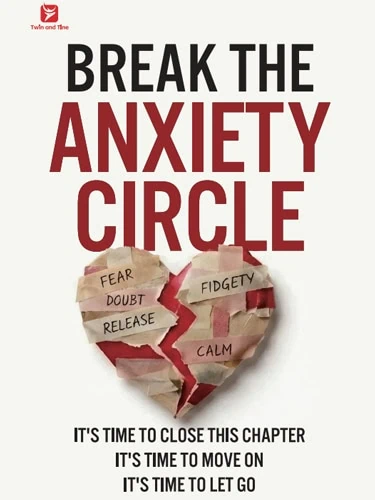
The Book That Helped Me Stop Replaying the Past
Let me tell you about a specific exercise that changed my perspective. I want to share it because it illustrates what I mean about actionable methods.
One night, I was reading “Break the Anxiety Circle” and came across a passage about self-blame. Carter asked a simple question. Would you speak to a friend the way you speak to yourself about your past mistakes?
The answer for me was no. Absolutely not. I would never tell a friend they were stupid for missing the signs. I would never remind a friend of every small failure they had ever made. But I did that to myself daily.
The book guided me through a process of rewriting my internal dialogue. Instead of saying “I should have known better,” I learned to say “I did the best I could with what I knew then.” That small shift did not erase the past. It changed my relationship to it.
The 15-Minute Processing Ritual
Here is a framework I developed after reading several books on letting go. I call it the 15-Minute Processing Ritual. It sounds formal. It is actually quite simple.
When a painful memory surfaces, I do not push it away. Pushing it away makes it stronger. Instead, I give myself fifteen minutes to fully feel it. I sit with the emotion. I let myself be sad or angry or embarrassed.
Then I ask myself three questions. What did I learn from this? What would I do differently now? What does this memory need from me to release its grip?
Most of the time, the memory needs acknowledgment. It needs me to say “Yes, that happened. It hurt. I survived.” That is often enough to loosen its hold.
Why People-Pleasing Keeps You Tied to the Past
Here is something I did not expect to find in a book about anxiety. The connection between people-pleasing and being stuck in the past.
Think about it. When you spend years putting other people’s needs first, you collect a lot of resentment. You replay moments where you said yes when you meant no. You regret not standing up for yourself. That regret becomes another chain to the past.
Learning to set boundaries is not just about improving current relationships. It is about freeing yourself from the weight of old ones. Every time you say no to something that drains you, you are also saying no to the version of yourself who never knew how.
The books that helped me most all circled back to this theme. Self-acceptance is not selfish. Boundaries are not cruelty. You are allowed to take up space.

What If the Past Involves Other People?
This was the hardest part for me. Letting go of my own mistakes was one thing. Letting go of what other people did to me felt impossible.
I read somewhere that forgiveness is not about the other person. It is about freeing yourself from carrying the weight of what they did. That made sense intellectually. Emotionally, I still wanted an apology that was never coming.
Here is what helped. I stopped waiting for closure from other people and started creating my own. I wrote letters I never sent. I said the things I wished I had said, out loud, alone in my car. I gave myself permission to grieve the relationship I thought I had.
Not every connection deserves unlimited access to your time and emotions. Some people hurt you and never look back. That does not mean you are doomed to carry that hurt forever. It means you have to be the one who decides to put it down.
Frequently Asked Questions About Letting Go of the Past
Books on how to let go of the past, which one should I start with?
Start with “Break the Anxiety Circle” by Miles Carter. It is straightforward and sincere. It covers overlapping struggles, so you will likely find relevant sections no matter what kind of past you are holding onto.
How many books on how to let go of the past should I read?
Reading one book with full attention beats skimming five. Choose one, do the exercises, give it time to sink in. When you feel ready, move to the next. There is no rush.
Can books on how to let go of the past really make a difference?
Books can give you tools and language for understanding yourself. They cannot do the emotional work for you. A good book is like a helpful friend. It walks beside you. You still have to take the steps.
One Last Thing
I still think about the past sometimes. That has not changed. What changed is the weight of those thoughts. They do not pin me down anymore. They pass through like weather.
If you are reading this because another night of rumination just stole your sleep, I want you to know something. The fact that you are searching for help means you have not given up. That counts for more than you realize. The right book will not fix everything overnight. But it can show you where the door is.
You are the one who has to walk through it. I think you are ready.